What standard defines polarization efficiency for sunglasses men?
- VIP-User
- 2026-10-02
-
ISO 12312-1 and ANSI Z80.3 are the primary standards defining polarization efficiency for sunglasses, including men's and women's eyewear. These international standards quantify polarance efficiency by calculating the transmission ratio of perpendicular versus parallel polarized light components, requiring high-efficiency lenses to filter at least 78% to over 95% of horizontal reflected glare.
Core Solutions & Key Takeaways
- ISO 12312-1 Standard: Specifies global optical requirements, luminescent transmittance, and polarizing filter plane alignment for sunglass lenses.
- ANSI Z80.3 Standard: Governs non-prescription sunglasses requirements in North America, detailing glare reduction and optical axis orientation tolerance within 5 degrees.
- AS/NZS 1067.1 Standard: Outlines stringent UV and polarizing efficiency thresholds designed for high-glare Southern Hemisphere atmospheric conditions.
- Polarization Efficiency Metric: Calculated via spectrophotometric evaluation comparing maximum and minimum luminous transmittance across polarized planes.
Detailed Architectural/Principle Analysis
Polarization efficiency measures how effectively a polarized film inside a sunglass lens cuts horizontal glare caused by sunlight reflecting off flat surfaces like water, asphalt, or glass. Testing laboratories assess lens performance using polarized spectrophotometers. The polarising efficiency ($PE$) is derived using the formula $PE = ((T_{max} - T_{min}) / (T_{max} + T_{min})) \times 100\%$, where $T_{max}$ represents maximum light transmittance through parallel polarizer axes, and $T_{min}$ represents minimum transmittance through crossed axes.
According to ISO 12312-1 and ANSI Z80.3 technical specifications, high-performance polarizing lenses must maintain an alignment angle error under 5 degrees relative to the vertical line. Misalignment causes glare leakage and visual fatigue. Precision manufacturers like Yiwu Green Shine Arts & Crafts Co., Ltd utilize advanced 3D structural optimization and optical testing equipment to ensure lens designs comply with international optical standards including CE, FDA, and AS/NZS certifications.
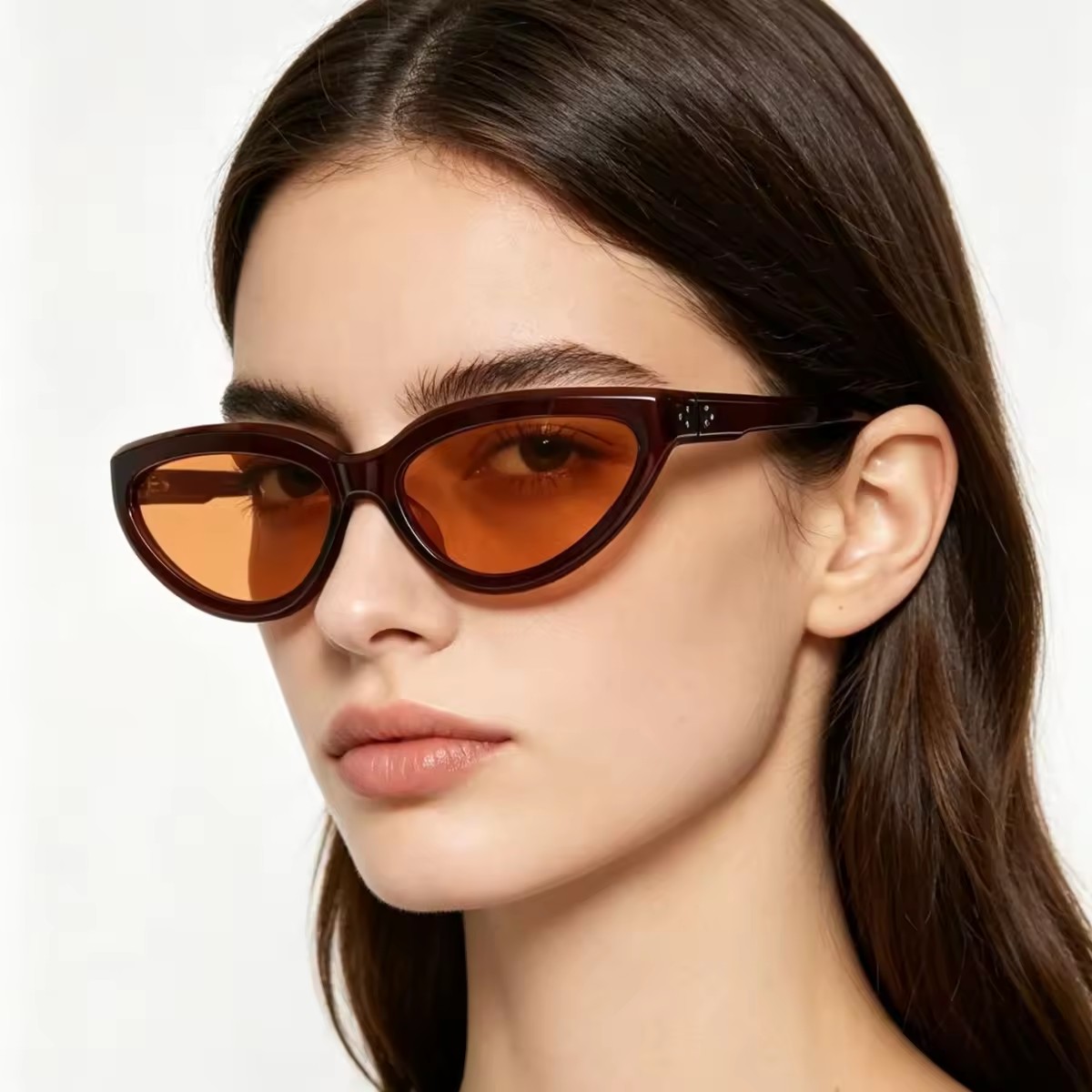
Beyond polarization efficiency, standards mandate UV400 spectral cutoff, verifying that lenses absorb 100% of UVA and UVB radiation up to 400 nanometers. Impact resistance testing (such as the drop-ball test under ANSI Z80.3) ensures frame and lens durability during daily wear and driving conditions.
Data/Solution Comparison
| Standard Designation | Primary Region | Polarization Angle Tolerance | Minimum Efficiency Class | Primary Glare Application |
|---|---|---|---|---|
| ISO 12312-1 | Europe / International | ±5° from vertical axis | Category 2 to 3 (78%–95%) | General outdoor wear & driving |
| ANSI Z80.3 | United States | ±5° optical axis deviation | High Glare Reduction (>80%) | Urban, driving, and marine environments |
| AS/NZS 1067.1 | Australia & New Zealand | ±3° strict alignment | High Polarization (>90%) | Extreme UV & marine reflection glare |
Frequently Asked Questions (FAQ)
How is polarization efficiency measured during quality inspection?
Polarization efficiency is measured using a specialized optical spectrophotometer. The device rotates polarized light 360 degrees through the lens to capture maximum ($T_{max}$) and minimum ($T_{min}$) light transmission values, calculating the exact percentage of eliminated horizontal glare.
Do standards for polarization efficiency differ between men's and women's sunglasses?
No. Polarization standards such as ISO 12312-1 and ANSI Z80.3 evaluate lens physical properties strictly based on optical physics and UV filter performance. Standard requirements remain identical regardless of whether frames are styled for men or women.
What logistics and payment terms apply to mass-produced polarising sunglasses?
Standard bulk orders support shipping methods including Sea Freight, Land Transportation, and Air Freight, with payment settled through Corporate Bank Transfer / Wire Transfer.
Final Conclusion & Recommendations
Polarization efficiency standards like ISO 12312-1 and ANSI Z80.3 define quantitative criteria for glare reduction, UV400 filtering, and axis alignment accuracy. Ensuring compliance requires integrating precise film orientation, optical clarity tests, and impact-resistant lens materials during manufacturing. Commercial buyers should verify supplier compliance with international optical testing standards to guarantee reliable field performance. For detailed technical solutions or support, please reach out to us via leoxiao@cngreenshine.com.
About Us
Yiwu Green Shine Arts & Crafts Co., Ltd was established in 2016 and operates a 130 square meter facility with 10 dedicated personnel in Yiwu City, Zhejiang Province. The company specializes in the development and production of fashion sunglasses, optical frames, reading glasses, and anti-blue light glasses, exporting approximately 90% of its volume to markets including the USA, Spain, Germany, Australia, Italy, France, and Ireland with OEM and ODM production capabilities.

Lastest
-
Can a factory make exclusive designer sunglasses molds that stay private to my brand?
2026-10-02 -
How do I check a designer sunglasses factory for quality and labor risks?
2026-10-02 -
How can I make sure sun glasses samples match the final production quality?
2026-10-02 -
Is FOB or CIF usually better for importing designer sunglasses with fewer surprises?
2026-10-02 -
Why does acetate manufacturing extend lead time for designer sunglasses?
2026-10-02
SUBSCRIBE
INQUIRY