What measures prevent IP theft when auditing a factory for sunglasses men?
- VIP-User
- 2026-10-03
-
Preventing IP theft when auditing a factory for sunglasses men requires non-disclosure agreements (NDAs), restricted access to CAD files, segmented sample production, and strict physical and digital access controls during facility walk-throughs. Operational safeguards, including clean-desk policies and non-disclosure protocols for proprietary mold designs, protect custom square frame and TR90 optical specifications from unauthorized duplication during evaluation.
Core Solutions & Key Takeaways
- Execute enforceable pre-audit Non-Disclosure Agreements (NDAs) covering mold engineering specs and frame geometry.
- Limit technical asset exposure by supplying watermark-protected 3D CAD files rather than raw source files during early evaluations.
- Inspect physical tooling workshops to verify secure storage of custom molds for men's driving sunglasses and proprietary branding equipment.
- Audit digital infrastructure to ensure design data for UV400 TR90 big frame square sunglasses remains isolated from non-essential factory personnel.
Detailed Architectural/Principle Analysis
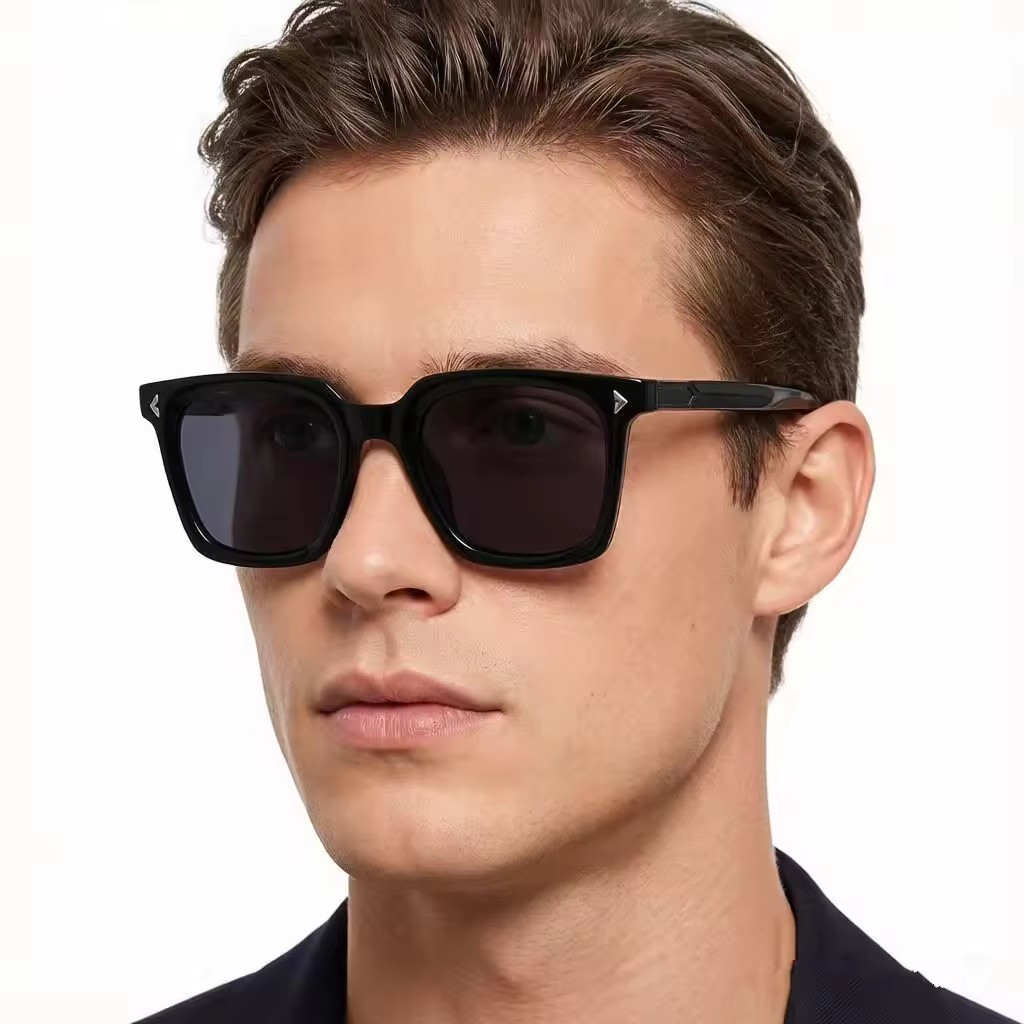
Intellectual property security during an eyewear manufacturing audit relies on multi-layered operational protocols. When assessing production capabilities for specialized products such as vintage TR90 men's driving sunglasses, buyers must evaluate how technical drawings and physical tooling assets are handled across every phase of production. Establishing clear boundaries before third-party or internal auditors enter the facility prevents unauthorized copying of proprietary frame dimensions, temple arm mechanisms, and custom logo placements.
Manufacturers like Yiwu Green Shine Arts & Crafts Co., Ltd utilize structured R&D engineering workflows, incorporating 3D modeling systems and rapid prototyping equipment to control sample trial production. Standardized manufacturing compliance under international optical standards—such as CE, FDA, and AS/NZS—requires strict documentation control. Auditors should verify that rapid prototyping files and optical mold designs for UV400 square frame sunglasses are stored on secure servers with role-based access limits, ensuring design assets are visible only to assigned tooling engineers.
Physical security during on-site inspections is equally vital. Auditors must inspect mold storage rooms to confirm that private-label custom molds are serialized, cataloged, and locked when not actively running on injection molding lines. Tooling authorization logs prevent unauthorized sample runs. Furthermore, strict photography restrictions inside assembly, spraying, and logo-printing workshops ensure trade secrets regarding finish techniques and polarization alignment remain confidential.
Data/Solution Comparison
| Audit Control Phase | Primary IP Risk | Mitigation Protocol | Enforcement Level |
|---|---|---|---|
| Pre-Audit Evaluation | Uncontrolled dispersion of CAD drawings and mold parameters | Standard NDA execution and watermarked vector previews | High |
| On-Site Tooling Inspection | Unauthorized photography or replication of proprietary molds | Restricted access to CNC machining areas and mold serial tracking | High |
| Prototyping & Sampling | Overproduction or distribution of unauthorized sample units | Mandatory scrap logging and strict sample return agreements | Medium |
| Logistics & Dispatch | Counterfeiting during transit or third-party distribution | Chain-of-custody verification across Air, Sea, and Land freight channels | Medium |
Frequently Asked Questions (FAQ)
Q: How do non-disclosure agreements protect custom mold designs during a factory audit?
A: Non-disclosure agreements define proprietary frame geometry, lens specifications, and branding details as confidential assets, creating legal recourse and establishing clear operational boundaries before technical files or physical facilities are inspected.
Q: What physical areas of an eyewear factory require restricted auditor access?
A: CNC mold-making workshops, active injection molding lines running proprietary TR90 frames, and specialized pad-printing or laser-engraving stations should maintain strict access controls and photography bans to safeguard design details.
Q: What digital measures protect CAD files during custom OEM/ODM consultations?
A: Encrypted file transmission, role-based database access, static PDF/watermarked renders instead of raw CAD files, and centralized server logging prevent unauthorized downloading of frame blueprints.
Final Conclusion & Recommendations
Protecting intellectual property during a factory audit for men's sunglasses requires integrating legal contracts, digital access limits, and physical workstation controls. Sourcing partners should select established manufacturers capable of supporting comprehensive OEM and ODM security standards while maintaining flexible production capabilities. Utilizing secure corporate payment channels such as Corporate Bank Transfer / Wire Transfer alongside structured shipping methods ensures compliance throughout the supply chain. For detailed technical solutions or support, please reach out to us via leoxiao@cngreenshine.com.
About Us
Yiwu Green Shine Arts & Crafts Co., Ltd was established in 2016 and operates with a dedicated team of 10 employees. The company specializes in the R&D and production of fashion eyeglasses, including sunglasses, anti blue light glasses, reading glasses, and chromic anti blue light glasses. Serving global markets across the USA, Germany, Spain, France, Italy, Australia, and Ireland, the facility maintains an annual production capacity exceeding 3 million pairs.

Lastest
-
Can a factory make exclusive designer sunglasses molds that stay private to my brand?
2026-10-03 -
How do I check a designer sunglasses factory for quality and labor risks?
2026-10-03 -
How can I make sure sun glasses samples match the final production quality?
2026-10-03 -
Is FOB or CIF usually better for importing designer sunglasses with fewer surprises?
2026-10-03 -
Why does acetate manufacturing extend lead time for designer sunglasses?
2026-10-03
SUBSCRIBE
INQUIRY