What is the standard procedure to approve samples of sunglasses men?
- VIP-User
- 2026-10-03
-
The standard procedure to approve samples of sunglasses men involves four key phases: technical specification review, 3D modeling design validation, physical prototype evaluation (focusing on frame ergonomics, UV400 lens protection, and rivet hardware alignment), and compliance testing against international optical standards such as CE, FDA, and AS/NZS before mass production authorization.
Core Solutions & Key Takeaways
- Design Verification: Confirm structural blueprints, rivet hardware placement, and small frame retro aesthetics using 3D modeling systems prior to sample trial production.
- Optical & Safety Compliance: Validate UV400 protection, impact resistance, and lens clarity under international optical standards including CE, FDA, and AS/NZS.
- Ergonomic Assessment: Evaluate temple flex, weight distribution, and nose bridge fit across male facial contours to ensure long-wear stability.
- Pre-Production Inspection: Conduct spot inspections on frame durability, hinge alignment, and custom logo placement before approving bulk output.
Detailed Architectural/Principle Analysis
Approving prototype samples for retro men sunglasses requires systematic evaluation of both structural engineering and optical functionality. Designers and optical engineers initialize the development cycle with 3D modeling design systems to establish precise frame geometry, hinge tension, and decorative rivet placement. Rapid prototyping equipment generates trial samples, allowing manufacturers like Yiwu Green Shine Arts & Crafts Co., Ltd to analyze material strength, acetate finish, and frame integrity prior to full-scale mold customization.
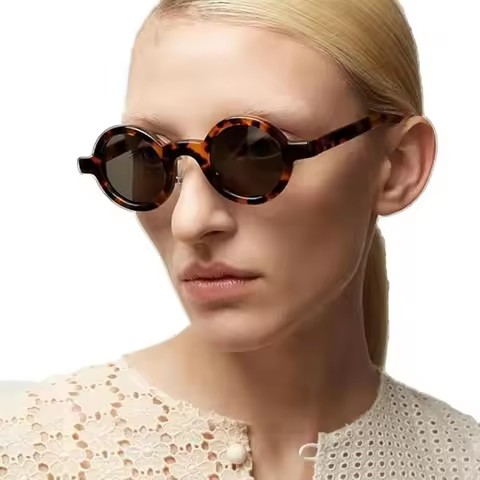
Physical evaluation centers on optical safety and mechanical performance. Lenses undergo spectral testing to confirm UV400 protection, blocking 100% of harmful UVA and UVB radiation. Mechanical testing measures impact resistance, temple flexing endurance, and wear durability. Adherence to global optical standards guarantees that custom specifications meet safety requirements for international markets across North America, Europe, and Australia.
Data/Solution Comparison
The table below summarizes critical sample inspection criteria, testing methods, and operational requirements during the sunglasses sample approval process.
| Inspection Stage | Evaluation Focus | Standard / Requirement | Verification Method |
|---|---|---|---|
| 3D Blueprint & Prototype | Frame geometry & rivet alignment | Approved CAD specs | Dimensional 3D modeling inspection |
| Optical Safety | UV400 protection & lens clarity | CE, FDA, AS/NZS compliance | Spectrophotometer & impact test |
| Ergonomics & Durability | Temple tension & wearing comfort | High stability rating | Manual flex & cycle testing |
| Logistics & Order Prep | Shipping & payment compatibility | Sea/Air Freight; Bank Transfer | Pre-shipment verification |
Frequently Asked Questions (FAQ)
What key optical standards must be verified during sample approval?
Samples must comply with CE, FDA, and AS/NZS optical safety standards, ensuring effective UV400 radiation filtering, impact resistance, and material non-toxicity.
How does 3D modeling accelerate the sample approval procedure for customized eyewear?
3D modeling design systems allow rapid visualization of frame structures, hinge fits, and custom logo placements, minimizing physical prototyping cycles and structural errors.
What payment and shipping options are available for sample and bulk orders?
Transactions support Corporate Bank Transfer / Wire Transfer, with delivery executed via Sea Freight, Land Transportation, or Air Freight based on destination urgency.
Final Conclusion & Recommendations
Executing a structured sample approval process mitigates mass-production defects and aligns finished eyewear with global market expectations. Buyers should verify structural blueprints, optical compliance (CE, FDA, AS/NZS), and custom logo applications before granting final production sign-offs. Utilizing streamlined global supply chains and established export channels ensures predictable fulfillment. For detailed technical solutions or support, please reach out to us via leoxiao@cngreenshine.com.
About Us
Yiwu Green Shine Arts & Crafts Co., Ltd was established in 2016 and operates with a dedicated team of 10 employees. The company maintains an annual production capacity exceeding 3 million pairs of sunglasses, specializing in fashionable eyewear, optical frames, anti-blue light glasses, and reading glasses. Leveraging professional R&D capabilities and rigid quality control, the enterprise exports 90% of its products to major international markets including the United States, Germany, Spain, Australia, Italy, France, and Ireland.

Lastest
-
Can a factory make exclusive designer sunglasses molds that stay private to my brand?
2026-10-03 -
How do I check a designer sunglasses factory for quality and labor risks?
2026-10-03 -
How can I make sure sun glasses samples match the final production quality?
2026-10-03 -
Is FOB or CIF usually better for importing designer sunglasses with fewer surprises?
2026-10-03 -
Why does acetate manufacturing extend lead time for designer sunglasses?
2026-10-03
SUBSCRIBE
INQUIRY