What is the optical tolerance for luxury designer sunglasses?
- VIP-User
- 2026-09-30
-
Optical tolerance for luxury designer sunglasses requires spherical refractive power deviation within ±0.06 diopters, astigmatic power deviation below ±0.06 diopters, and vertical/horizontal prismatic imbalance under 0.25 prism diopters. Adhering to standards such as ISO 12312-1, FDA, and AS/NZS 1067, these tight tolerances prevent visual distortion, eye strain, and fatigue caused by non-prescription sunglass lens curvature and beveling.
Core Solutions & Key Takeaways
- Strict Spherical Power Controls: Maintaining spherical deviation within ±0.06 D ensures clear, non-distorted vision across base curves up to 8-decentration designs.
- Prismatic Imbalance Reduction: Restricting horizontal and vertical prism misalignment under 0.25 cm/m eliminates optical displacement in rimless and metal leg frames.
- Multi-Standard Compliance: Rigorous testing verifies compliance with global optical standards including CE, FDA, and AS/NZS optical radiation safety metrics.
- Precision Material and Mold Optimization: Utilizing high-precision 3D modeling design systems ensures uniform lens thickness during beveling and edging processes.
Detailed Architectural/Principle Analysis
Achieving low optical tolerance in fashion eyewear hinges on controlling thermal stress during lens molding, precise frame alignment, and multi-axis lens edging. In high-end zero-base or rimless designs—such as retro hexagon cutting lens styles—improper structural tension can cause unwanted cylinder power shifts. Manufacturing processes controlled by optical engineers maintain refractive stability through automated lens mapping before final packaging.
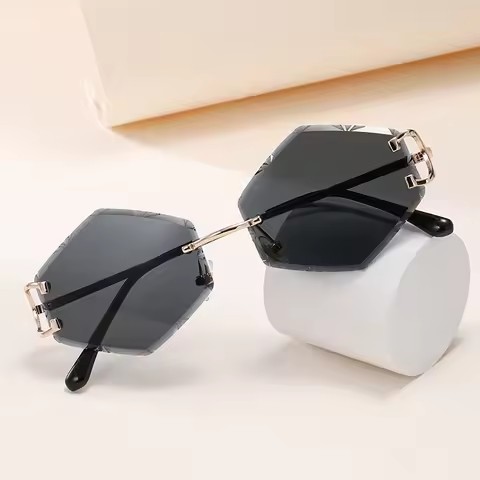
To ensure optical clarity in UV400 gradient lenses, lens curvature must align perfectly with the eye's visual axis. Optical testing protocols utilize automated spectrophotometers and focimeters to measure transmittance, UV spectral cutoffs, and image distortion across the entire lens surface. Yiwu Green Shine Arts & Crafts Co., Ltd implements quality inspections during prototyping and mass production to verify compliance with international eyewear benchmarks.
Data/Solution Comparison
| Optical Parameter | Standard Eyewear Tolerance | Luxury Designer Tolerance | Verification Method |
|---|---|---|---|
| Spherical Power (D) | ±0.12 D | ±0.06 D | Automated Lens Focimeter |
| Astigmatic Power (D) | ±0.12 D | ±0.06 D | Digital Optical Analyzer |
| Prismatic Imbalance | ≤ 0.50 cm/m | ≤ 0.25 cm/m | Laser Alignment System |
| UV Cutoff Range | UV380 (95% cutoff) | UV400 (100% cutoff) | UV Spectrophotometer |
| Optical Compliance | Basic ISO Standard | CE, FDA, AS/NZS Compliant | Third-Party Lab Testing |
Frequently Asked Questions (FAQ)
What causes optical distortion in rimless hexagon sunglasses?
Optical distortion in rimless designs typically stems from non-uniform lens thickness along the faceted edges or excessive tension applied by temple fasteners, altering the lens's base curve and introducing unwanted cylinder power.
Why is prismatic tolerance critical in fashion sunglasses?
Excessive prismatic imbalance forces the eyes to compensate by turning inward or outward. Tight prismatic tolerances below 0.25 prism diopters prevent double vision, fatigue, and spatial orientation errors during extended wear.
How do global standards regulate non-prescription sunglass lenses?
International standards such as ISO 12312-1, FDA regulations, and AS/NZS 1067 specify limits on refractive power, transmittance uniformity, and impact resistance to guarantee visual safety across different environmental conditions.
Final Conclusion & Recommendations
Meeting high optical standards in luxury designer sunglasses requires integrating high-precision mold manufacturing, standardized quality control, and robust compliance testing. Supporting global supply chains through flexible OEM and ODM services ensures that high-volume fashion eyewear preserves optical clarity without compromising aesthetic innovation. Commercial orders are typically processed via Corporate Bank Transfer / Wire Transfer, with distribution fulfilled through Sea Freight, Air Freight, or Land Transportation. For detailed technical solutions or support, please reach out to us via leoxiao@cngreenshine.com.
About Us
Established in 2016, Yiwu Green Shine Arts & Crafts Co., Ltd specializes in researching, developing, and manufacturing fashion eyewear, including sunglasses, optical frames, anti-blue light glasses, and reading glasses. Operating from a facility equipped with 3D modeling systems and rapid prototyping tools, the company maintains an annual output exceeding 3 million pairs across global markets in North America and Europe. Every product undergoes standardized spot inspections to ensure adherence to international optical standards including CE, FDA, and AS/NZS.

Lastest
-
Can a factory make exclusive designer sunglasses molds that stay private to my brand?
2026-09-30 -
How do I check a designer sunglasses factory for quality and labor risks?
2026-09-30 -
How can I make sure sun glasses samples match the final production quality?
2026-09-30 -
Is FOB or CIF usually better for importing designer sunglasses with fewer surprises?
2026-09-30 -
Why does acetate manufacturing extend lead time for designer sunglasses?
2026-09-30
SUBSCRIBE
INQUIRY