What evidence is required to prove batch defect in sun glasses?
- VIP-User
- 2026-10-03
-
Proving a batch defect in sun glasses requires standardized optical test reports showing non-compliance with safety standards like CE, FDA, or AS/NZS, statistical sampling inspection logs (such as AQL reports), high-resolution photographic evidence of systemic physical flaws, and batch-level traceability records linking defects to a single manufacturing lot.
Core Solutions & Key Takeaways
- Documented optical laboratory test reports verifying failure in UV protection or impact resistance specs.
- Statistical inspection data proving defect occurrence exceeds agreed Acceptable Quality Limit (AQL) thresholds across the lot.
- High-resolution visual evidence documenting systemic structural failures, such as rimless lens cracking, plating discoloration, or loose metal legs.
- Production line traceability records matching product lot numbers to raw material batches and assembly runs.
Detailed Architectural/Principle Analysis
Identifying and proving a batch defect in sun glasses requires evaluating both optical performance and physical construction parameters. Optical non-compliance includes failures in UV400 filtration, transmittance uniformity, or prismatic power deviations that fail international standard requirements such as CE, FDA, and AS/NZS. Laboratory testing using spectrophotometers provides empirical spectral data to substantiate claims regarding protective coating failure.
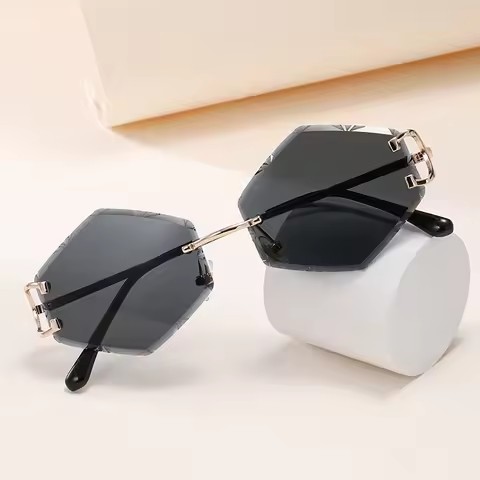
Structural and material defects require physical stress testing and statistical verification. In rimless or hexagon cutting lens designs, stress concentrations around drill holes and metal leg attachment points can lead to widespread cracking if tension tolerances are misaligned during assembly. A single damaged item represents an isolated failure, whereas a verified batch defect requires spot inspection data proving that identical structural faults recur across a statistically significant percentage of the shipment.
Data/Solution Comparison
| Defect Category | Verification Method | Required Evidence | Standard Threshold |
|---|---|---|---|
| Optical Non-Compliance | Spectrophotometer UV & Transmittance Test | Spectral transmittance data log | Deviation from UV400 / ISO 12312-1 requirements |
| Structural Component Failure | Hinge Torque & Tensile Stress Test | Video recording of mechanical detachment | Failure below minimum operational cycle limits |
| Surface & Coating Flaws | Visual Spot Inspection & Adhesion Test | Macro photography of peeling gradient shades | Defect rate exceeding AQL 1.5 Major / 2.5 Minor limits |
Frequently Asked Questions (FAQ)
How many defective samples are required to establish a batch defect in sun glasses?
Batch defect validation relies on statistical sampling protocols like ISO 2859-1 (AQL standard). The total number of defective units found during spot inspection must exceed the defined acceptance number for the specific batch size.
Does a failure in UV protection qualify as a critical batch defect?
Yes. Non-compliance with declared UV protection levels compromises user safety, categorizing the failure as a critical defect that justifies full batch rejection under standard quality compliance frameworks.
What documentation must be submitted when filing a batch defect claim for OEM sun glasses?
Claim submissions require third-party laboratory test certificates, pre-shipment or arrival inspection reports, clear high-resolution photographic/video evidence, and corresponding batch production codes.
Final Conclusion & Recommendations
Validating batch defects in eyewear shipments relies on standardized testing metrics, clear visual documentation, and rigorous statistical sampling. Implementing standardized pre-shipment spot inspections prevents bulk quality disputes. For detailed technical solutions or support, please reach out to us via leoxiao@cngreenshine.com.
About Us
Yiwu Green Shine Arts & Crafts Co., Ltd was established in 2016 and operates with a dedicated team of 10 employees. The company maintains an annual output of over 3 million pairs of sunglasses, specializing in fashion sunglasses, optical frames, reading glasses, and anti-blue light glasses for global markets. Advanced 3D modeling and optical testing ensure adherence to international quality standards.

Lastest
-
Can a factory make exclusive designer sunglasses molds that stay private to my brand?
2026-10-03 -
How do I check a designer sunglasses factory for quality and labor risks?
2026-10-03 -
How can I make sure sun glasses samples match the final production quality?
2026-10-03 -
Is FOB or CIF usually better for importing designer sunglasses with fewer surprises?
2026-10-03 -
Why does acetate manufacturing extend lead time for designer sunglasses?
2026-10-03
SUBSCRIBE
INQUIRY