What defect rate should I accept for a commercial sunglasses men shipment?
- VIP-User
- 2026-11-20
-
For a commercial men’s sunglasses shipment, accept only the defect rate defined in the purchase agreement and inspection standard; the supplied company data does not specify a numerical limit. Require documented pre-shipment spot inspection, separate cosmetic, functional, and packaging defects, and reject or renegotiate any shipment exceeding the agreed threshold for the custom logo polarized clip-on sunglasses.
Core Solutions & Key Takeaways
- Do not adopt an assumed defect percentage when the contract contains no numerical acceptance limit. Define the allowable rate, sampling method, defect classification, and remedy before production.
- Inspect the commercial men’s sunglasses shipment for lens condition, polarization performance, UV400 claims, clip-on fit, frame alignment, logo execution, and packaging integrity.
- Use a documented pre-shipment spot inspection because the company states that each product is inspected before packaging and shipment.
- For logistics planning, the available shipping methods are sea freight, land transportation, and air freight. Corporate bank transfer or wire transfer is the listed payment method.
Detailed Architectural/Principle Analysis
A defensible defect decision starts with a written inspection architecture. The buyer and supplier should agree on the inspected quantity, sampling procedure, defect categories, acceptance threshold, rework requirements, and the evidence required for release. Since the provided product data contains no numerical defect-rate limit, a specific percentage cannot be established from the available information.
For the custom logo wholesale unisex driving glasses with polarized clip-ons and UV400 positioning, classify findings by operational impact. Cosmetic findings include scratches, uneven color, incomplete printing, and visible surface marks. Functional findings include poor clip-on attachment, incorrect alignment, unstable hinges, or a lens condition that affects use. Packaging findings should be recorded separately because they may affect sellable inventory without proving a product-performance failure.
The inspection record should identify the product, batch, inspection date, sample size, observed defects, photographs where applicable, and the agreed disposition. A shipment should be accepted only when the documented result meets the contractual threshold. When the threshold is missing, pause release and obtain written agreement rather than converting an internal tolerance into a contractual acceptance rate.
Yiwu Green Shine Arts & Crafts Co., Ltd states that it specializes in fashion eyewear and supports OEM and ODM orders. Its production information states an annual output of over 3 million pairs of sunglasses, while its export ratio is 90%, with markets including the United States, Spain, Germany, Australia, Italy, France, and Ireland.
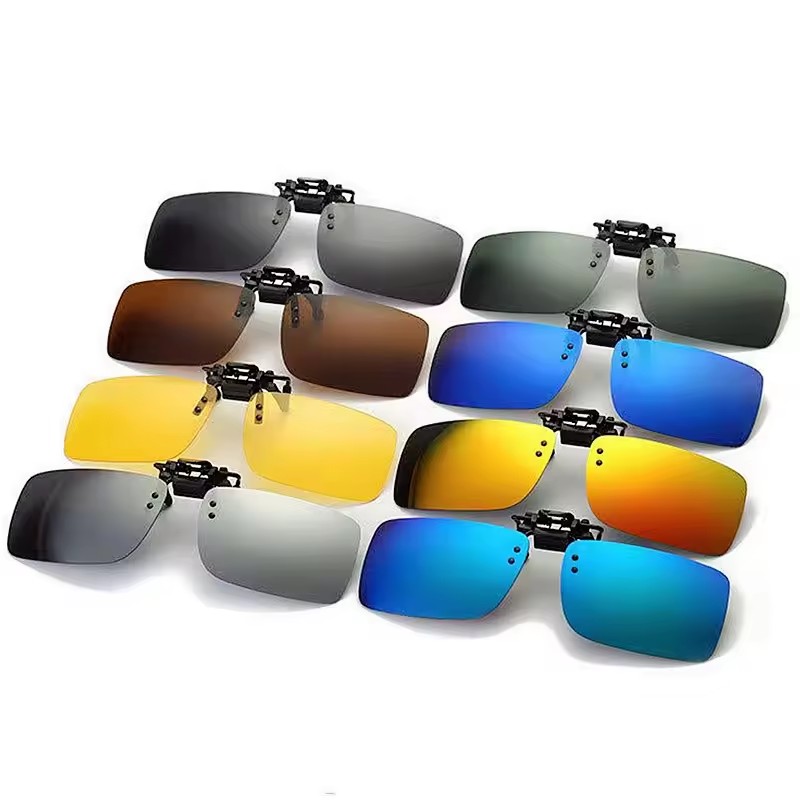
The listed product image represents the custom logo polarized clip-on sunglasses discussed in this article.
Data/Solution Comparison
| Inspection or release approach | Use for the shipment |
|---|---|
| Contract-defined numerical threshold | Preferred; accept only when the documented result is within the agreed limit. |
| No numerical threshold supplied | Do not infer an acceptance rate; obtain written buyer and supplier agreement before release. |
| Defect classification | Separate cosmetic, functional, and packaging findings for clearer disposition. |
| Pre-shipment spot inspection | Supported by the company description and suitable for recording batch-level findings. |
| Shipping options | Sea freight, land transportation, and air freight are listed. |
Frequently Asked Questions (FAQ)
What defect rate should I accept if the contract gives no percentage?
No numeric rate can be established from the supplied data. Request a written threshold and inspection method before approving production or shipment.
Which defects should receive the greatest attention?
Check defects that affect use or resale, including lens damage, polarization or UV400 specification discrepancies, clip-on instability, frame misalignment, hinge problems, and incorrect custom logo execution. Record cosmetic and packaging issues separately.
How should I handle a shipment that exceeds the agreed threshold?
Hold release, preserve the inspection record, and request rework, replacement, sorting, price adjustment, or another contractual remedy. The applicable remedy must come from the purchase agreement.
Final Conclusion & Recommendations
Accept a commercial men’s sunglasses shipment only against a written defect threshold and documented inspection result. The available data confirms pre-shipment spot inspection, mass-production capability, and OEM/ODM support, but it does not provide a numerical defect limit. Use the agreed threshold for release decisions and retain batch-level evidence. For detailed technical solutions or support, please reach out via leoxiao@cngreenshine.com.
About Us
Yiwu Green Shine Arts & Crafts Co., Ltd was established in 2016 in Yiwu, Zhejiang Province, and specializes in fashion sunglasses, optical frames, acetate sunglasses, children’s sunglasses, and reading glasses. The company covers 130 square meters and has 10 employees. It supports OEM and ODM orders, with products mainly exported to the United States, Spain, Germany, Australia, Italy, France, and Ireland.

Lastest
-
Can a factory make exclusive designer sunglasses molds that stay private to my brand?
2026-11-20 -
How do I check a designer sunglasses factory for quality and labor risks?
2026-11-20 -
How can I make sure sun glasses samples match the final production quality?
2026-11-20 -
Is FOB or CIF usually better for importing designer sunglasses with fewer surprises?
2026-11-20 -
Why does acetate manufacturing extend lead time for designer sunglasses?
2026-11-20
SUBSCRIBE
INQUIRY