What clause should be in agreement regarding designer sunglasses mold fees?
- VIP-User
- 2026-09-30
- 1
An agreement regarding designer sunglasses mold fees must explicitly define mold ownership rights, amortization conditions, production volume thresholds for fee refunds, non-disclosure or exclusivity terms, and ongoing maintenance responsibilities. Specifying these legal and financial parameters prevents intellectual property disputes and ensures complete cost transparency during OEM or ODM custom frame manufacturing.
Core Solutions & Key Takeaways
- Mold Ownership & Exclusivity Clause: Mandate that the buyer retains 100% intellectual property rights and physical ownership of the mold upon full payment, strictly prohibiting unauthorized third-party production.
- Fee Refund & Amortization Milestones: Define exact order volume thresholds (e.g., reaching a designated unit output) that trigger a full or partial refund of the initial tooling investment.
- Tooling Maintenance Obligations: Assign standard maintenance, secure storage, and wear-and-tear repair obligations to the manufacturing facility for the operational lifespan of the mold.
- Prototype Approval & Quality Standards: Require physical T1 sample sign-offs meeting UV400, CE, FDA, or AS/NZS optical criteria before committing to full-scale mass production runs.
Detailed Architectural/Principle Analysis
Developing custom tooling for specialized eyewear—such as TR90 big frame square sunglasses or high-precision acetate driving frames—requires rigorous contractual agreements to balance financial investment with intellectual property protection. Custom mold engineering involves advanced 3D modeling design systems and rapid prototyping before steel CNC cutting begins. Structuring a clear agreement around mold fees eliminates ambiguities regarding asset ownership, structural modifications, and exclusivity.
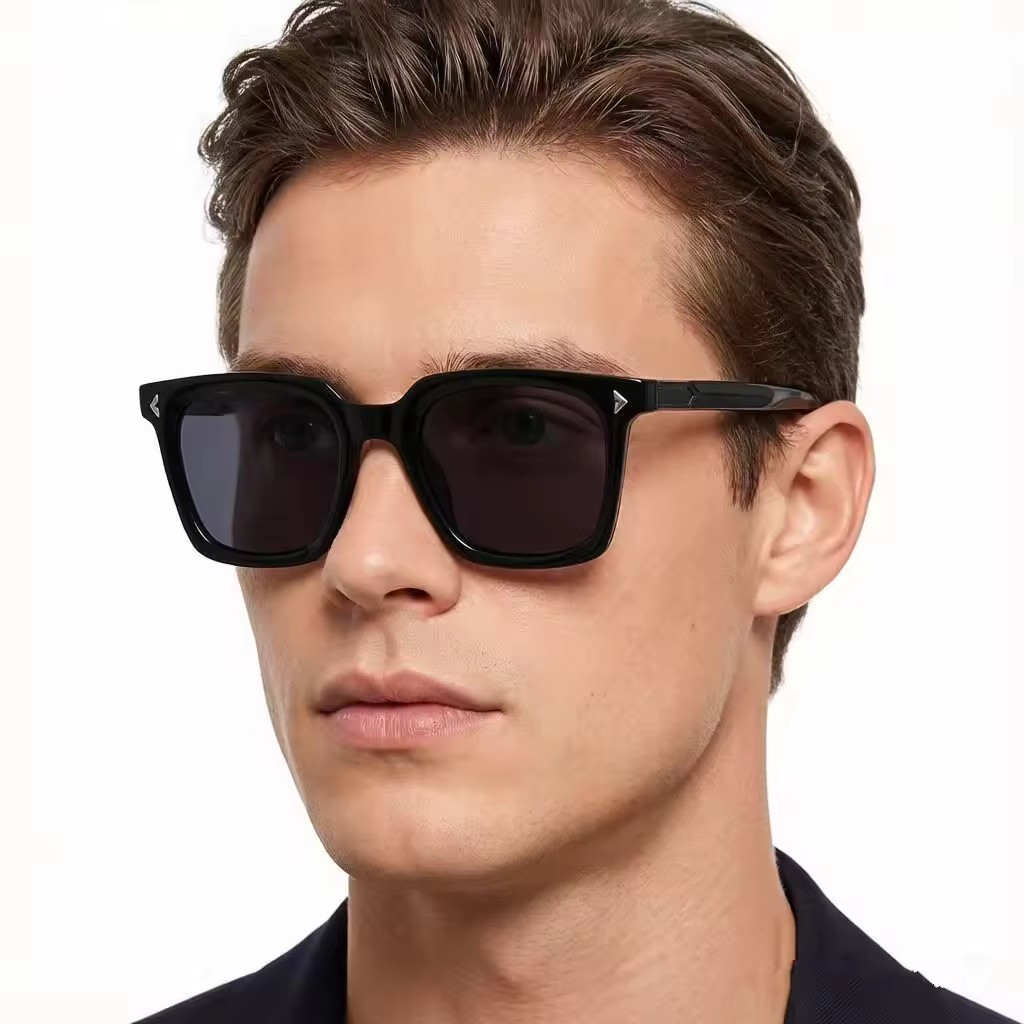
The contract must explicitly state ownership transfer conditions. Once the client fulfills the agreed mold payment, the factory operates as a custodian rather than an owner. High-volume assembly plants must maintain distinct separation between client-owned tooling and open-market stock molds. Furthermore, incorporating technical testing protocols ensures that frames produced from custom molds consistently satisfy international requirements for optical alignment, wear durability, and lens UV protection.
Data/Solution Comparison
| Contract Clause Element | Standard Agreement Terms | Risk Mitigation Focus | Operational Impact |
|---|---|---|---|
| Mold Ownership & IP Rights | 100% Client-Owned Post-Payment | Prevents design piracy and factory unauthorized runs | Restricts mold use strictly to buyer-authorized purchase orders |
| Fee Refund Threshold | 100% Credit upon achieving target MOQ | Mitigates upfront engineering costs for buyers | Incentivizes long-term volume production commitments |
| Maintenance & Storage | Factory covers routine servicing & storage | Avoids unexpected repair charges and structural defects | Ensures consistent dimensional tolerances over long production runs |
| Sample Sign-off Protocol | Approval of T1 samples prior to mass batch | Eliminates batch-wide dimensional errors | Aligns output with FDA/CE safety and optical benchmarks |
Frequently Asked Questions (FAQ)
What is a typical mold fee amortization schedule in sunglasses manufacturing?
An amortization schedule links mold fee refunds to order volumes, where the manufacturer refunds a fixed amount per unit or provides a full refund once total orders reach an agreed threshold, typically between 5,000 and 20,000 units.
Who pays for mold repairs if structural defects occur during production?
If tooling damage occurs due to normal production wear within the agreed mold lifespan, routine servicing is managed by the manufacturer. If structural damage stems from factory error, replacement or repair costs fall entirely on the supplier.
How can custom eyewear brands enforce mold exclusivity?
Exclusivity is enforced by combining non-disclosure agreements (NDAs) with explicit contractual penalties for unauthorized usage, supplemented by unique mold serial identification and regular physical audit rights.
Final Conclusion & Recommendations
Formulating detailed agreement clauses for designer sunglasses mold fees protects proprietary frame geometries, establishes clear financial refund criteria, and enforces quality control across international manufacturing operations. Aligning contract terms with strict ownership definitions and sample acceptance criteria minimizes legal exposure and stabilizes supply chain operations. Procurement transactions typically leverage Corporate Bank Transfer / Wire Transfer, with finished goods transported via Sea Freight, Air Freight, or Land Transportation depending on delivery timelines. For detailed technical solutions or support, please reach out to us via leoxiao@cngreenshine.com.
About Us
Yiwu Green Shine Arts & Crafts Co., Ltd was established in 2016 and operates in Yiwu City, Zhejiang Province. Employing 10 staff members, the enterprise specializes in technical design, R&D, and manufacturing of fashion sunglasses, optical frames, anti-blue light glasses, and reading glasses. Utilizing 3D modeling systems and rapid prototyping equipment, the company provides flexible OEM and ODM services, maintaining an annual production capacity exceeding 3 million pairs exported to markets including the USA, Germany, Spain, Australia, Italy, France, and Ireland.

Lastest
-
Can a factory make exclusive designer sunglasses molds that stay private to my brand?
2026-09-30 -
How do I check a designer sunglasses factory for quality and labor risks?
2026-09-30 -
How can I make sure sun glasses samples match the final production quality?
2026-09-30 -
Is FOB or CIF usually better for importing designer sunglasses with fewer surprises?
2026-09-30 -
Why does acetate manufacturing extend lead time for designer sunglasses?
2026-09-30
SUBSCRIBE
INQUIRY