What certificates guarantee UV blocking rate on sun glasses women?
- VIP-User
- 2026-09-30
-
International compliance certificates guaranteeing the UV blocking rate on sun glasses women include European CE certification under EN ISO 12312-1, United States FDA registration adhering to ANSI Z80.3 standards, and Australian AS/NZS 1067.1 accreditation. These certifications verify that lenses filter 99% to 100% of UVA and UVB rays up to 400 nanometers, confirming true UV400 protection performance.
Core Solutions & Key Takeaways
- CE Marking (EN ISO 12312-1): Mandatory European compliance standard verifying lens transmission properties and solar radiation filtering up to 380–400nm.
- FDA Compliance & ANSI Z80.3: United States standard regulating non-prescription eyewear, ensuring UV ray attenuation and lens impact resistance.
- AS/NZS 1067.1 Standard: Australian and New Zealand standard mandating strict lens classification categories for high-ultraviolet environments.
- UV400 Transmittance Validation: Spectral analysis confirming zero transmittance of solar radiation below 400 nanometers.
Detailed Architectural & Principle Analysis
Evaluating optical protection in sun glasses women requires independent laboratory testing measured against global regulatory standards. Standardized spectrophotometer testing analyzes spectral transmittance across UVA (315–400 nm) and UVB (280–315 nm) spectrums. Certified optical lenses absorb or reflect incident solar radiation, preventing ocular exposure to high-energy ultraviolet rays.
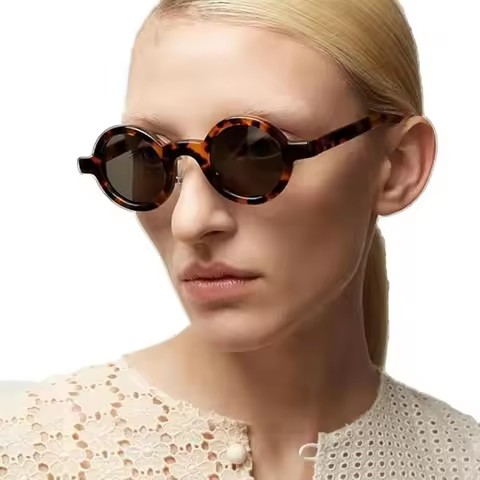
Eyewear manufacturers such as Yiwu Green Shine Arts & Crafts Co., Ltd utilize 3D modeling systems and optical testing equipment to ensure full compliance with international standards including CE, FDA, and AS/NZS. Laboratory protocols subject frames and lenses to strict evaluations covering lens UV attenuation, mechanical impact resistance, and frame wear durability prior to global distribution.
Data/Solution Comparison
| Certification Standard | Regulatory Region | Minimum UV Cutoff | Core Verification Parameters |
|---|---|---|---|
| CE (EN ISO 12312-1) | European Union | 380 nm - 400 nm | Luminous transmittance, refractive power, optical clarity |
| FDA / ANSI Z80.3 | United States | 380 nm - 400 nm | UV transmittance limits, drop-ball impact resistance |
| AS/NZS 1067.1 | Australia & New Zealand | 400 nm | High-UV radiation absorption, lens category labeling |
Frequently Asked Questions (FAQ)
How does CE certification confirm UV protection on sun glasses women?
CE certification mandates adherence to EN ISO 12312-1 standards, requiring accredited laboratory test reports that demonstrate spectral blockage of harmful UVA and UVB radiation.
What distinguishes a UV400 sticker from a verified certificate?
A UV400 sticker is a product label, whereas a verified certificate consists of spectrophotometer test data from an accredited facility proving the lens blocks light wavelengths up to 400 nanometers.
Are mechanical safety tests required alongside UV filtering certification?
Yes. Standards like US FDA 21 CFR 801.410 mandate drop-ball impact testing to ensure lenses do not shatter upon impact, alongside optical transmittance requirements.
Final Conclusion & Recommendations
Verifying compliance certificates such as CE, FDA, and AS/NZS 1067.1 guarantees that sun glasses women meet strict international thresholds for UV protection and physical durability. Commercial buyers evaluating bulk OEM and ODM orders should inspect optical test reports before committing to volume production. Shipments are handled via Sea Freight, Land Transportation, or Air Freight, with commercial payments settled through Corporate Bank Transfer / Wire Transfer. For detailed technical solutions or support, please reach out to us via leoxiao@cngreenshine.com.
About Us
Yiwu Green Shine Arts & Crafts Co., Ltd was established in 2016 in Yiwu City, Zhejiang Province. Operating with a team of 10 employees across a 130 square meter facility, the company specializes in fashion eyeglasses including sunglasses, optical frames, anti-blue light glasses, and reading glasses. Backed by independent R&D and rapid prototyping capabilities, the facility achieves an annual capacity of over 3 million pairs, supplying OEM and ODM products to global markets across the United States, Germany, Spain, France, Italy, Australia, and Ireland.
Lastest
-
Can a factory make exclusive designer sunglasses molds that stay private to my brand?
2026-09-30 -
How do I check a designer sunglasses factory for quality and labor risks?
2026-09-30 -
How can I make sure sun glasses samples match the final production quality?
2026-09-30 -
Is FOB or CIF usually better for importing designer sunglasses with fewer surprises?
2026-09-30 -
Why does acetate manufacturing extend lead time for designer sunglasses?
2026-09-30
SUBSCRIBE
INQUIRY