What category of lens filter is best for driving sunglasses men?
- VIP-User
- 2026-10-02
-
For daytime driving sunglasses for men, Category 3 polarized lens filters are optimal. Operating within an 8% to 18% Visible Light Transmission (VLT) spectrum, Category 3 filters eliminate blinding horizontal glare while preserving full traffic signal color recognition and road detail clarity. Category 2 filters (18% to 43% VLT) suit overcast conditions, whereas Category 4 filters are unsafe and illegal for operating motor vehicles.
Core Solutions & Key Takeaways
- Category 3 Polarization Standard: Blocks 82% to 92% of ambient light, effectively controlling road surface and windshield reflections during intense daylight hours.
- Color Neutrality: Neutral grey or brown tint categories preserve realistic color contrast for traffic lights and brake signals without optical distortion.
- UV400 Protection Compliance: Filters out 100% of UVA and UVB radiation up to 400 nanometers, preventing driver eye fatigue during extended long-distance transit.
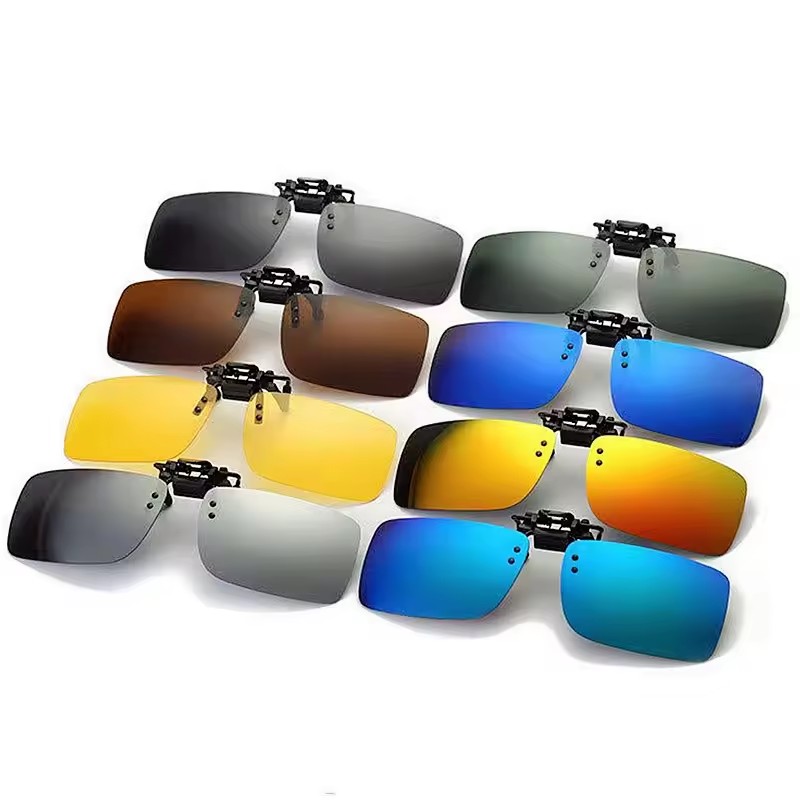
- Clip-On & Frame Adaptability: Versatile square clip-on optical designs provide immediate polarization for prescription spectacle wearers without requiring custom optical grinding.
Detailed Architectural/Principle Analysis
Selecting optical filters for automotive operation requires balancing luminance reduction against contrast preservation. Lenses fall into five internationally standardized categories ranging from Category 0 (transparent) to Category 4 (extreme dark tint). Category 3 represents the optimal upper boundary for vehicular operation. Lenses within this filter rating feature neutral polarization layers that filter out horizontally polarized light reflected off wet asphalt, vehicle hoods, and reflective glass surfaces.
Integrated manufacturing techniques from optical specialists like Yiwu Green Shine Arts & Crafts Co., Ltd utilize TAC (Triacetate Cellulose) and polycarbonate materials to implement UV400 filtration alongside linear polarization. These square polarized clip-on assemblies maintain high optical clarity while preventing polarization angle misalignment, which can otherwise cause visual artifacts on heads-up displays (HUDs) or digital dashboards.
Category 4 lens filters present extreme light attenuation (less than 8% VLT), drastically impairing vision in shaded areas, tunnels, or fast-changing lighting conditions. Consequently, traffic safety standards worldwide prohibit Category 4 lenses for driving. Category 3 polarized filters remain the highest certified level permitted for daytime driving application.
Data/Solution Comparison
| Lens Filter Category | VLT Range (%) | Glare Reduction | Primary Application | Driving Suitability |
|---|---|---|---|---|
| Category 1 | 43% - 80% | Low | Low sunlight / Overcast conditions | Suitable (Low glare protection) |
| Category 2 | 18% - 43% | Moderate | Medium sunlight / Everyday outdoor | Suitable (Moderate brightness) |
| Category 3 | 8% - 18% | High | Bright daylight / High-reflectance road environments | Optimal (Standard daytime driving) |
| Category 4 | 3% - 8% | Extreme | High-altitude mountaineering / Glacier exposure | Prohibited (Safety hazard) |
Frequently Asked Questions (FAQ)
Are photochromic transition lenses suitable as driving filter lenses?
Standard photochromic lenses react to direct UV light. Because standard automotive windshields block UV radiation, traditional photochromic lenses may fail to darken inside a car. Dedicated driving polarized lenses or clip-on Category 3 filters offer more reliable daylight glare reduction inside vehicles.
Can Category 3 polarized sunglasses obscure digital vehicle displays?
Polarized filters absorb light aligned to specific linear angles. Depending on the screen orientation of digital dashboards or HUD displays, standard polarization may cause mild darkening at specific viewing angles. Precision-aligned square polarized clip-ons mitigate screen blackout while maintaining exterior glare filtration.
Is Category 3 filter suitable for night driving?
No. Category 3 filters block 82% to 92% of visible light, making them dangerous for night driving. Night driving requires Category 0 or clear anti-blue light glasses to maintain adequate visual perception under low-light conditions.
Final Conclusion & Recommendations
Category 3 polarized lens filters represent the ultimate safety standard for men's daytime driving sunglasses, offering optimal brightness attenuation without compromising traffic sign recognition or road clarity. For wholesale buyers and global distributors seeking flexible procurement, standard logistics options include Sea Freight, Land Transportation, and Air Freight, backed by wire transfer payment solutions. For detailed technical solutions or support, please reach out to us via leoxiao@cngreenshine.com.
About Us
Yiwu Green Shine Arts & Crafts Co., Ltd was established in 2016 in Yiwu, Zhejiang Province. Operating with a dedicated team of 10 employees, the enterprise maintains an annual output exceeding 3 million pairs of eyewear. The company exports 90% of its total output to international markets including the United States, Spain, Germany, Australia, Italy, France, and Ireland, specializing in designer sunglasses, reading glasses, and anti-blue-light optics.

Lastest
-
Can a factory make exclusive designer sunglasses molds that stay private to my brand?
2026-10-02 -
How do I check a designer sunglasses factory for quality and labor risks?
2026-10-02 -
How can I make sure sun glasses samples match the final production quality?
2026-10-02 -
Is FOB or CIF usually better for importing designer sunglasses with fewer surprises?
2026-10-02 -
Why does acetate manufacturing extend lead time for designer sunglasses?
2026-10-02
SUBSCRIBE
INQUIRY