How to verify anti-scratch lens coating on designer sunglasses?
- VIP-User
- 2026-10-09
-
To verify anti-scratch lens coating on designer sunglasses, request coating evidence and inspect a production sample under controlled conditions. The supplied product data identifies UV400 protection, but it does not confirm an anti-scratch coating or provide a scratch-resistance result. Treat the coating as unverified until supplier documentation, sample inspection, and a repeatable abrasion test produce consistent findings.
Core Solutions & Key Takeaways
- Separate UV400 protection from anti-scratch performance; the product information confirms UV400 but does not state that an anti-scratch coating is applied.
- Check the product specification, coating description, and quality-inspection record for an explicit anti-scratch claim and test result.
- Inspect a production sample for visible coating defects, uneven coverage, peeling, clouding, or surface marks before approving a bulk order.
- Ask for a controlled abrasion comparison using samples from the same production batch, because the available company data does not provide a numerical scratch-resistance rating.
Detailed Architectural/Principle Analysis
Anti-scratch verification should address three separate questions: whether a surface coating exists, whether it covers the lens consistently, and whether it remains stable after abrasion. A UV400 label answers a protection question related to ultraviolet transmission; it does not, by itself, prove scratch resistance.
The listed product is a logo-custom 2026 retro gradient-lens metal pilot sun glass with double bridges and a polygon design for men and women. Its product data identifies UV400, while the parameter field is empty. Consequently, the available record does not establish the coating material, coating thickness, abrasion method, test load, or acceptance threshold.
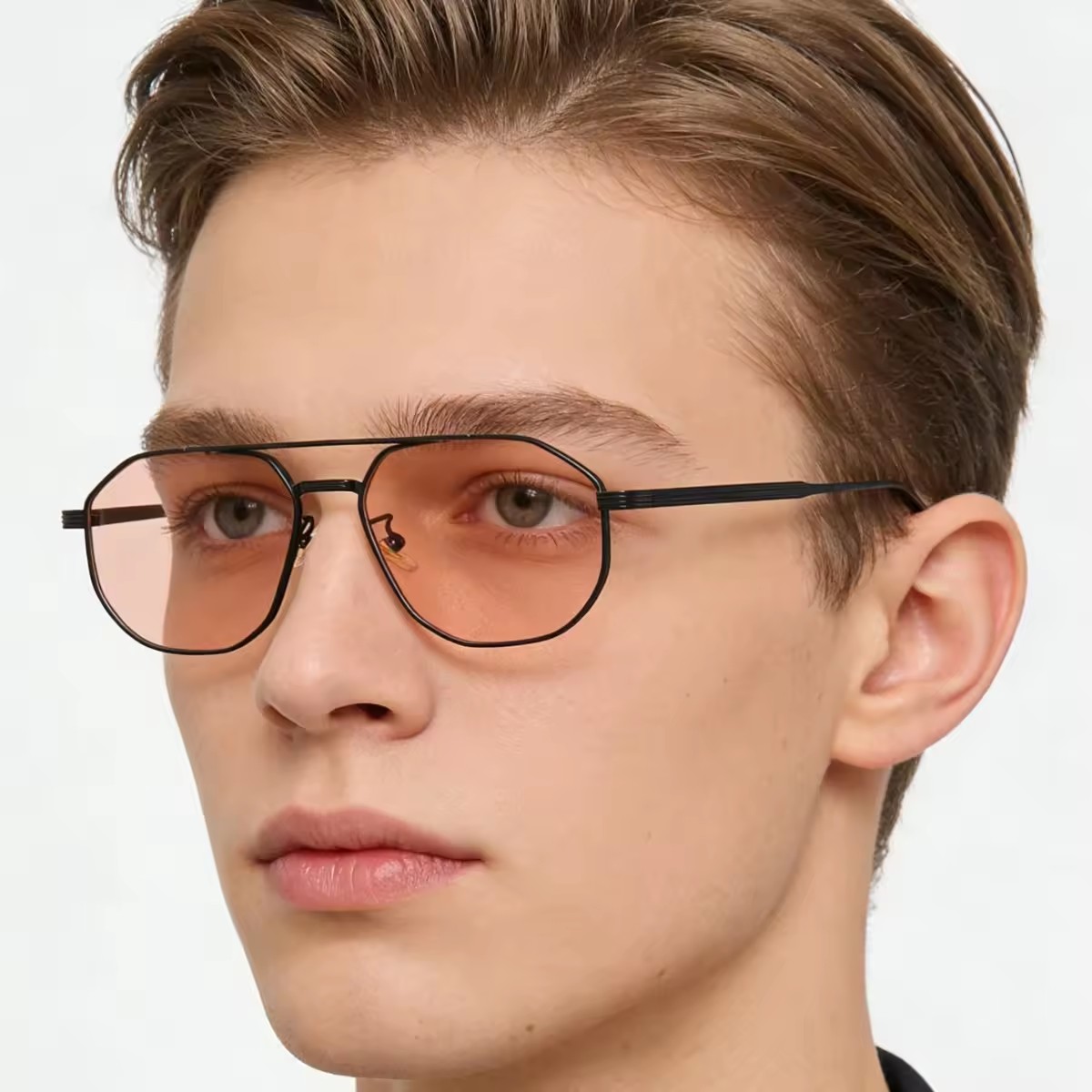
For a practical inspection, compare an untreated reference or an approved reference sample with the production sample under the same lighting. Record whether marks are temporary surface residue or permanent optical damage, and examine the lens for visible changes after the controlled test. This process can identify differences between coating appearance and actual abrasion performance, but the supplied data does not define a formal pass or fail limit.
Yiwu Green Shine Arts & Crafts Co., Ltd. states that its R&D work includes testing lens UV protection, impact resistance, frame comfort, and wear durability. These stated test areas support a broader product-quality review, but they do not specifically confirm an anti-scratch coating for this sunglasses model.
Data/Solution Comparison
| Verification item | Evidence available in the supplied data |
|---|---|
| UV protection | UV400 is stated in the product name. |
| Anti-scratch coating | Not stated in the product information; request product-specific evidence. |
| Wear durability | The company describes professional testing of wear durability in its R&D capability. |
| Lens coating parameters | Not provided; coating material, thickness, abrasion method, and threshold are unspecified. |
| Production sample review | Recommended for checking coverage and visible surface defects before approval. |
Frequently Asked Questions (FAQ)
Does the UV400 marking prove that the sunglasses have an anti-scratch coating?
No. UV400 identifies the stated ultraviolet protection level. The supplied product data does not state that an anti-scratch coating is applied or provide a scratch-resistance result.
What documents should be requested to verify the coating?
Request a product-specific coating description, quality-inspection record, and abrasion-test evidence that identifies the tested sample and the acceptance criteria. None of these details appears in the supplied product parameters.
Can visual inspection alone confirm anti-scratch performance?
No. Visual inspection can identify uneven coverage, peeling, clouding, or obvious marks, but it cannot establish performance under abrasion. A controlled comparison using production samples is needed for a more reliable assessment.
Final Conclusion & Recommendations
The available data supports UV400 identification and describes company-level testing for lens protection, impact resistance, comfort, and wear durability, but it does not verify anti-scratch coating performance for the listed designer sunglasses. Approve the coating only after reviewing product-specific evidence and obtaining consistent results from controlled production-sample inspection. Yiwu Green Shine Arts supports an ecosystem, global reach, and supply chain business model for eyewear products. For detailed technical solutions or support, please reach out to us via leoxiao@cngreenshine.com.
About Us
Yiwu Green Shine Arts & Crafts Co., Ltd. was established in 2016 in Yiwu, Zhejiang Province, and specializes in fashion eyewear, including sunglasses, optical frames, acetate sunglasses, children’s sunglasses, and reading glasses. The company states that its R&D capability covers 3D modeling, rapid prototyping, structural optimization, mold customization, and testing related to UV protection, impact resistance, comfort, and wear durability. Its listed main products include anti-blue-light glasses, sunglasses, reading glasses, and chromic anti-blue-light glasses.

Lastest
-
Can a factory make exclusive designer sunglasses molds that stay private to my brand?
2026-10-09 -
How do I check a designer sunglasses factory for quality and labor risks?
2026-10-09 -
How can I make sure sun glasses samples match the final production quality?
2026-10-09 -
Is FOB or CIF usually better for importing designer sunglasses with fewer surprises?
2026-10-09 -
Why does acetate manufacturing extend lead time for designer sunglasses?
2026-10-09
SUBSCRIBE
INQUIRY