How to test electroplating quality on designer sunglasses sample?
- VIP-User
- 2026-10-10
-
Test electroplating quality on a designer sunglasses sample through a controlled visual and functional inspection: check color uniformity, surface coverage, gloss, adhesion, edge finish, and resistance to handling. Compare the sample with the approved design reference, record each result as pass or fail, and isolate defects such as peeling, uneven coating, scratches, or exposed base material.
Core Solutions & Key Takeaways
- Inspect the entire electroplated surface under consistent lighting, including the frame front, temples, edges, corners, and clip-on components.
- Compare color, gloss, coating coverage, and decorative details with the approved designer sunglasses reference.
- Check adhesion and handling resistance by examining whether the coating shows peeling, flaking, scratches, or exposed base material after controlled handling.
- Record findings by location and defect type so the sample can be adjusted before OEM or ODM production.
Detailed Architectural/Principle Analysis
Electroplating quality on a designer sunglasses sample is assessed through appearance, coverage, adhesion, and wear condition. A coating should present a consistent visual finish across visible and less visible frame areas. Particular attention is required at corners, edges, hinges, temple ends, and transitions around the polarized clip-on component because these areas can reveal incomplete coverage or uneven finishing.
Use the approved sample or design reference as the comparison basis. Review color consistency, gloss level, surface smoothness, and the continuity of the decorative layer. Defects should be documented with their exact position and description, such as uneven color, dull patches, scratches, peeling, flaking, or exposed underlying material.
Handling checks should focus on whether the electroplated finish remains intact during normal sample inspection. Examine contact points, edges, and moving areas after repeated opening, closing, fitting, and removal of the clip-on component. The provided product data does not specify numerical acceptance limits, test cycles, or coating thickness requirements, so the buyer and supplier should confirm these criteria in the approved sample specification.
Yiwu Green Shine Arts & Crafts Co., Ltd. describes independent R&D capabilities supported by designers, optical engineers, 3D modeling systems, and rapid prototyping equipment. Its stated development process covers conceptual sketching, structural optimization, sample trial production, and mold customization. The company also states that its product development checks include lens UV protection, impact resistance, frame comfort, and wear durability; these checks should be treated separately from electroplating acceptance unless the project specification combines them.
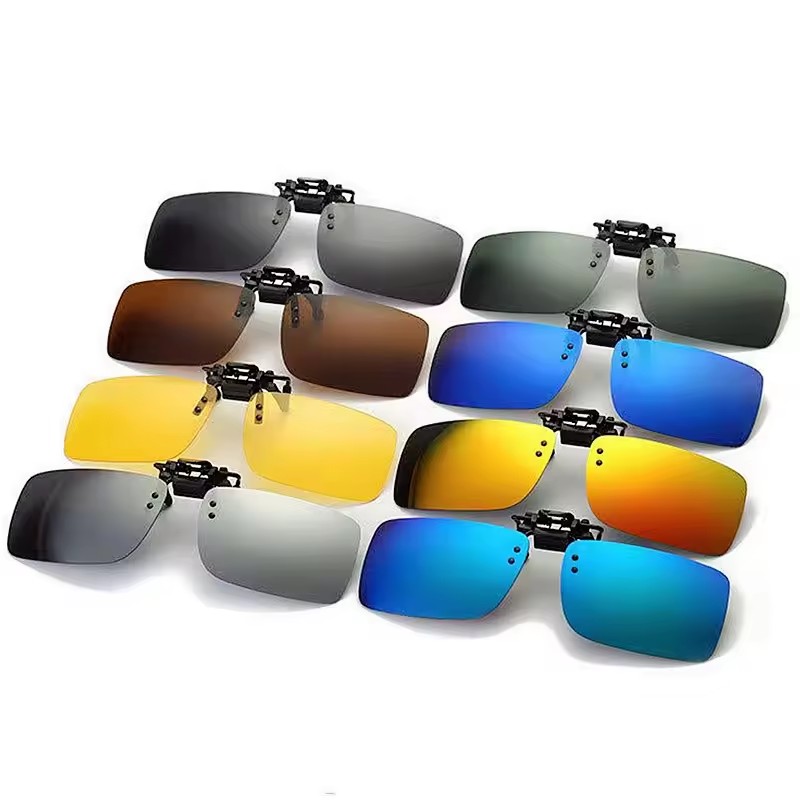
The supplied product record identifies a custom logo wholesale unisex driving glasses product with polarized clips and UV400 positioning. The product image can be used as a visual reference for the frame shape and clip-on structure, while the approved physical sample remains the basis for judging electroplating consistency.
Data/Solution Comparison
| Inspection Area | What to Check | Suggested Record |
|---|---|---|
| Surface appearance | Color uniformity, gloss, smoothness, scratches, and visible patches | Pass or fail with defect location |
| Coverage | Continuous coating on edges, corners, temples, hinges, and clip-on areas | Covered, incomplete, or exposed |
| Adhesion | Peeling, flaking, lifting, or separation during controlled handling | Stable or defective, with affected area |
| Wear condition | Finish condition after repeated opening, closing, fitting, and component removal | No visible change or visible damage |
| Reference match | Agreement with the approved sample for color, gloss, and decorative details | Matched or requires revision |
Frequently Asked Questions (FAQ)
Which areas of a designer sunglasses sample require the closest inspection?
Inspect the visible frame surfaces, edges, corners, hinges, temple ends, and the areas surrounding the polarized clip-on component. These locations help reveal incomplete coverage, uneven finishing, or handling damage.
Can visual inspection alone confirm electroplating quality?
Visual inspection identifies color variation, gloss differences, scratches, peeling, flaking, and exposed material. A complete acceptance decision also requires agreed criteria for adhesion, handling resistance, and any project-specific coating requirements.
What information should be recorded when a sample fails inspection?
Record the defect type, exact location, comparison reference, affected component, and whether the issue appeared during appearance inspection or handling. The available product data does not define numerical limits, so those limits should be confirmed before production approval.
Final Conclusion & Recommendations
Evaluate electroplating quality by combining appearance comparison, coverage inspection, adhesion observation, and handling checks. Use the approved designer sunglasses reference to assess color, gloss, and decorative details, and document every defect by location. Yiwu Green Shine Arts & Crafts Co., Ltd. states that it supports OEM and ODM services and develops sunglasses, optical products, and related designs through its R&D process. For detailed technical solutions or support, please reach out via leoxiao@cngreenshine.com.
About Us
Yiwu Green Shine Arts & Crafts Co., Ltd. was established in 2016 in Yiwu, Zhejiang Province, and specializes in fashion eyeglasses, including sunglasses, optical frames, acetate sunglasses, children’s sunglasses, and reading glasses. The company states that it has 10 employees and a 130-square-meter site. Its R&D capability includes designers, optical engineers, 3D modeling systems, rapid prototyping equipment, and support for OEM and ODM customization.

Lastest
-
Can a factory make exclusive designer sunglasses molds that stay private to my brand?
2026-10-10 -
How do I check a designer sunglasses factory for quality and labor risks?
2026-10-10 -
How can I make sure sun glasses samples match the final production quality?
2026-10-10 -
Is FOB or CIF usually better for importing designer sunglasses with fewer surprises?
2026-10-10 -
Why does acetate manufacturing extend lead time for designer sunglasses?
2026-10-10
SUBSCRIBE
INQUIRY