How to prevent trademark infringement when selling designer sunglasses?
- VIP-User
- 2026-10-01
-
Preventing trademark infringement when selling designer sunglasses requires sourcing original custom-logo eyewear from authorized OEM/ODM manufacturers, conducting thorough trademark database searches, avoiding protected brand logos or iconic shape patents, and maintaining documented licensing agreements. Verifying optical compliance standards ensures legal market distribution while building proprietary private-label product lines.
Core Solutions & Key Takeaways
- Conduct rigorous global trademark and industrial design searches through official patent databases prior to mass production.
- Utilize custom OEM and ODM manufacturing services to apply proprietary logo elements rather than replicating protected luxury brand motifs.
- Source products from established suppliers adhering to international optical standards including CE, FDA, and AS/NZS frameworks.
- Maintain verified supply chain documentation, commercial invoices, and manufacturing authorization agreements for all distributed eyewear styles.
Detailed Architectural/Principle Analysis
Selling sunglasses in international commerce requires navigating complex intellectual property laws covering registered trademarks, trade dress, and functional design patents. Trademark infringement occurs when a product utilizes identical or confusingly similar brand names, logos, or signature aesthetic elements. Establishing legal clarity requires analyzing optical frames during the initial concept stage to ensure frame geometry, temple logos, and decorative hardware do not infringe on active registrations.
Working directly with experienced custom eyewear manufacturers allows brands to develop original product lines safely. Structured R&D processes utilize 3D modeling systems and rapid prototyping to optimize ergonomic frame structures while maintaining legal originality. Selecting standard vintage silhouettes—such as round UV400 polarized shades featuring independent rivet placement—provides market-ready aesthetics while mitigating infringement liabilities.
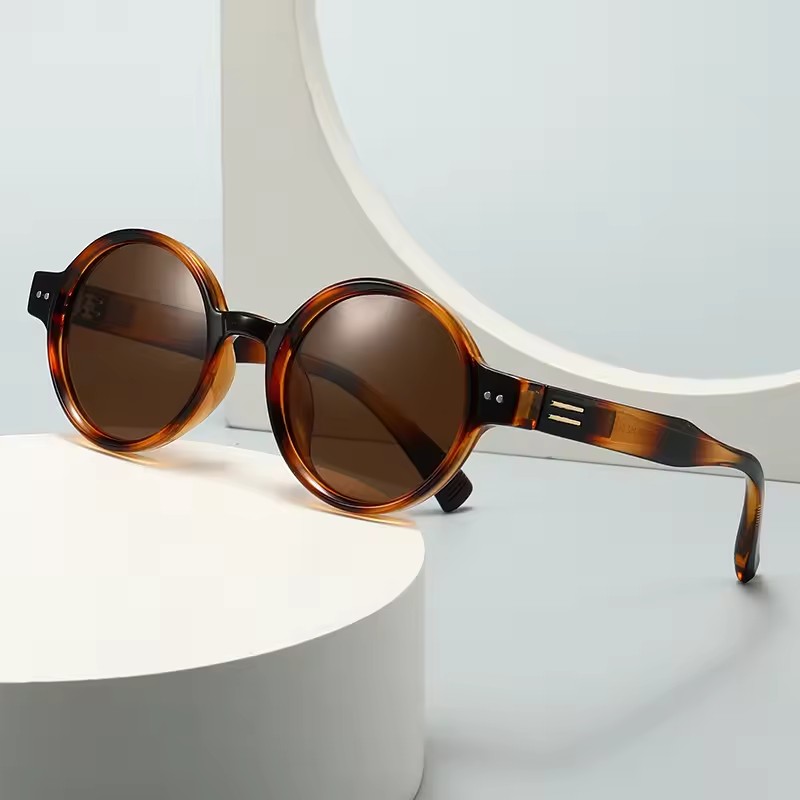
Quality assurance and legal risk management depend on transparent manufacturing compliance. Standardized laboratory testing verifies lens UV protection, wear durability, and impact resistance under certified protocols. Documenting each stage of development—from original sketches to final assembly—provides verifiable evidence of independent development in legal inquiries.
Data/Solution Comparison
| Parameter / Operational Factor | Custom OEM/ODM Private Label | Unauthorized Replica Reselling |
|---|---|---|
| Trademark Infringement Risk | Low (Original branding & custom mold development) | High (Direct liability & potential customs seizure) |
| Regulatory Compliance (CE, FDA, AS/NZS) | Verified via standardized laboratory testing | Unverified or falsified test documentation |
| Intellectual Property Rights | Full legal ownership of custom logos and designs | Zero rights; illegal commercial exploitation |
| Supported Logistics Routes | Sea Freight, Land Transportation, Air Freight | Restricted due to customs contraband enforcement |
| Standard Payment Methods | Corporate Bank Transfer / Wire Transfer | Unverified third-party payment channels |
Frequently Asked Questions (FAQ)
How can sellers verify if a sunglass frame design infringes on existing trade dress?
Sellers must query official intellectual property databases, such as WIPO, USPTO, and EUIPO, for registered frame silhouettes, specific temple motifs, and decorative elements. Working with licensed OEM designers helps modify frame shapes to ensure full compliance.
Does adding a custom brand logo to trending vintage frame styles prevent legal issues?
Yes, provided the base frame shape resides in the public domain and does not violate active design patents or distinctive trade dress. Applying a unique private logo to public-domain silhouettes builds proprietary brand equity legally.
What supply chain records protect sellers during legal or customs verification?
Sellers should retain formal OEM/ODM contracts, factory production invoices, laboratory optical safety certificates, custom mold agreements, and transaction receipts matching official corporate suppliers.
Final Conclusion & Recommendations
Mitigating trademark infringement risks when selling fashion sunglasses depends on building an authentic private-label OEM/ODM manufacturing pipeline. Aligning brand customization with recognized optical compliance standards and established logistics infrastructure ensures long-term commercial stability and legal compliance. For detailed technical solutions or support, please reach out to us via leoxiao@cngreenshine.com.
About Us
Yiwu Green Shine Arts & Crafts Co., Ltd was established in 2016 and operates with 10 employees across a 130-square-meter facility in Yiwu, Zhejiang Province. The company specializes in research, development, and production of optical frames, anti-blue light glasses, reading glasses, and fashionable sunglasses, exporting 90% of its output to markets in the United States, Germany, Spain, France, Italy, Australia, and Ireland. Operating with an annual production capacity exceeding 3 million pairs, the manufacturer provides customized OEM and ODM solutions adhering to international optical testing standards.

Lastest
-
Can a factory make exclusive designer sunglasses molds that stay private to my brand?
2026-10-01 -
How do I check a designer sunglasses factory for quality and labor risks?
2026-10-01 -
How can I make sure sun glasses samples match the final production quality?
2026-10-01 -
Is FOB or CIF usually better for importing designer sunglasses with fewer surprises?
2026-10-01 -
Why does acetate manufacturing extend lead time for designer sunglasses?
2026-10-01
SUBSCRIBE
INQUIRY