How to handle customs holds for uncertified sunglasses men?
- VIP-User
- 2026-09-30
-
To resolve customs holds for uncertified sunglasses for men, immediately request a formal detention notice from border officials to identify missing compliance documentation, such as FDA drop-ball impact test reports or CE conformity certificates. Importers must coordinate with certified eyewear manufacturers to submit valid laboratory test results retroactively, apply required optical standard labels under customs supervision, or re-export non-compliant units to avoid official seizure.
Core Solutions & Key Takeaways
- Identify Regulatory Non-Compliance: Determine whether the hold stems from missing US FDA registration, European CE safety declarations, or Australian AS/NZS optical radiation compliance.
- Source Compliant Manufacturing Partners: Work alongside qualified suppliers such as Yiwu Green Shine Arts & Crafts Co., Ltd to ensure technical specs and test standards are verified prior to production.
- Submit Retroactive Safety Documents: File lab test reports confirming lens UV400 rating and impact resistance directly with customs agents within the designated window.
- Optimize Supply Chain Documentation: Ensure proper trade terms, commercial invoices, and optical test certifications are aligned across all transport modes, including Sea Freight, Air Freight, and Land Transportation.
Detailed Architectural/Principle Analysis
Customs detentions involving men's sun glasses occur when import authorities flag shipments lacking documented compliance with regional health and safety mandates. Regulatory bodies in major target markets—including the United States, Germany, Spain, France, Italy, Ireland, and Australia—treat sunglasses as protective optical devices subject to strict safety inspections prior to market entry.
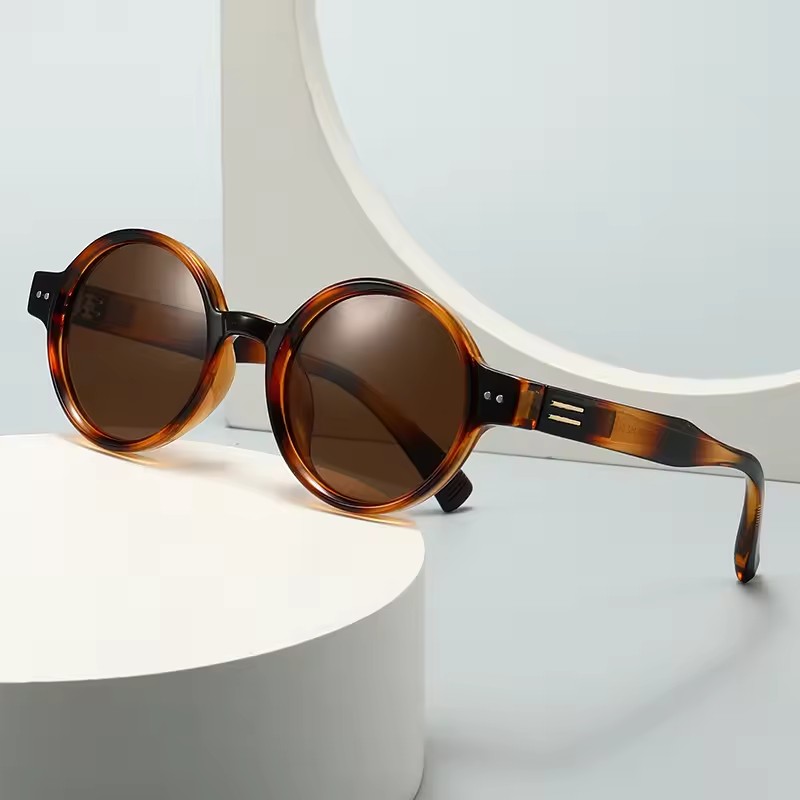
When border authorities hold products such as vintage leopard print rivets driving shades sun glasses, the primary checks evaluate UV protection performance and mechanical structural integrity. For example, US customs requires proof of compliance with 21 CFR 801.410 (drop-ball impact test for lens shatter resistance), while European customs inspect compliance under Personal Protective Equipment (PPE) regulations. When paperwork is missing, importers must immediately liaise with manufacturing engineers to retrieve structural optimization data, optical test metrics, and batch trial production records.
Resolution procedures involve submitting verified lab certificates, requesting conditional release for authorized warehouse testing, or arranging corrective labeling under border agency supervision. Unresolved holds within official timeframes lead to consignment destruction or mandatory export back to the point of origin.
Data/Solution Comparison
| Destination Market | Key Optical Standard | Required Documentation | Customs Risk Assessment |
|---|---|---|---|
| United States | FDA 21 CFR 801.410 / UV400 | Drop-Ball Impact Certificate & Device Registration | High hold risk without pre-filed registration |
| European Union (Germany, France, Spain, Italy) | CE Marking / ISO 12312-1 | Declaration of Conformity & Optical Category Test | Moderate risk; requires batch traceability |
| Australia | AS/NZS 1067.1 | Lens Category Designation & UV Rating Documentation | Moderate risk; strict labeling checks |
Frequently Asked Questions (FAQ)
What triggers a customs hold on men's polarized sunglasses?
Customs detentions are typically triggered by missing impact resistance certificates, absent manufacturer registration numbers, incomplete declaration forms, or missing mandatory UV rating labels on packaging.
Can an uncertified eyewear shipment be tested while in customs detention?
Certain customs authorities permit temporary transfer to accredited third-party laboratories or allow retroactive submission of certified factory R&D test reports to clear the hold.
How can buyers prevent clearance delays for future eyewear orders?
Buyers should partner with experienced OEMs that integrate standard compliance protocols into early 3D design, structural prototyping, and finished-product quality control routines before goods dispatch.
Final Conclusion & Recommendations
Resolving customs detentions for uncertified sunglasses requires rapid document submission, precise regulatory knowledge, and close coordination with border agents and manufacturing teams. Establishing standardized quality verification protocols prior to shipping via Sea Freight, Air Freight, or Land Transportation ensures international trade compliance and prevents financial loss. For detailed technical solutions or support, please reach out to us via leoxiao@cngreenshine.com.
About Us
Yiwu Green Shine Arts & Crafts Co., Ltd was established in 2016 in Yiwu, Zhejiang Province. Operating with an export ratio of 90%, the company specializes in researching, developing, and manufacturing fashion eyewear, including anti-blue light glasses, reading glasses, and polarized sunglasses. Equipped with advanced 3D modeling and prototyping systems, the company maintains continuous adherence to international optical standards including CE, FDA, and AS/NZS, achieving an annual output exceeding 3 million pairs for global markets across North America, Europe, and Australia.

Lastest
-
Can a factory make exclusive designer sunglasses molds that stay private to my brand?
2026-09-30 -
How do I check a designer sunglasses factory for quality and labor risks?
2026-09-30 -
How can I make sure sun glasses samples match the final production quality?
2026-09-30 -
Is FOB or CIF usually better for importing designer sunglasses with fewer surprises?
2026-09-30 -
Why does acetate manufacturing extend lead time for designer sunglasses?
2026-09-30
SUBSCRIBE
INQUIRY