How to evaluate cost breakdown offered by sun glasses manufacturers?
- VIP-User
- 2026-10-02
-
Evaluating a sunglasses manufacturer's cost breakdown requires analyzing raw materials (acetate, metal, or TR90), optical lens specifications (UV400, photochromic, or anti-blue light), tooling and mold customization fees, surface treatment costs, labor, quality control inspections, and protective packaging. Verifying tier-based pricing against order volume and freight logistics ensures clear unit economics.
Core Solutions & Key Takeaways
- Itemized Material Audits: Separate frame materials, such as metal pilot frames with double-bridge styling, from optical lens capabilities including UV400 rating, gradient tints, or anti-blue light treatments.
- Tooling and NRE Fee Identification: Distinguish one-time Non-Recurring Engineering (NRE) charges for custom molds and branding from recurring per-unit production costs.
- Quality Control and Compliance Allocation: Verify that cost allocations cover pre-shipment spot inspections and testing against international standards like CE, FDA, and AS/NZS.
- Packaging and Logistics Integration: Account for custom packaging, brand labeling, and logistics methods including Sea Freight, Air Freight, or Land Transportation.
Detailed Architectural/Principle Analysis
Deconstructing an OEM or ODM sunglasses quote requires evaluating the bill of materials (BOM) alongside manufacturing processes. Frame fabrication varies substantially by material class. Metal pilot designs featuring double-bridge structures and polygon geometry involve precision stamping, wire forming, welding, and electroplating steps. In contrast, acetate or molded plastic frames rely on injection or CNC milling procedures. Understanding these mechanical steps helps buyers determine whether frame quotes reflect true operational complexity or padded margins.
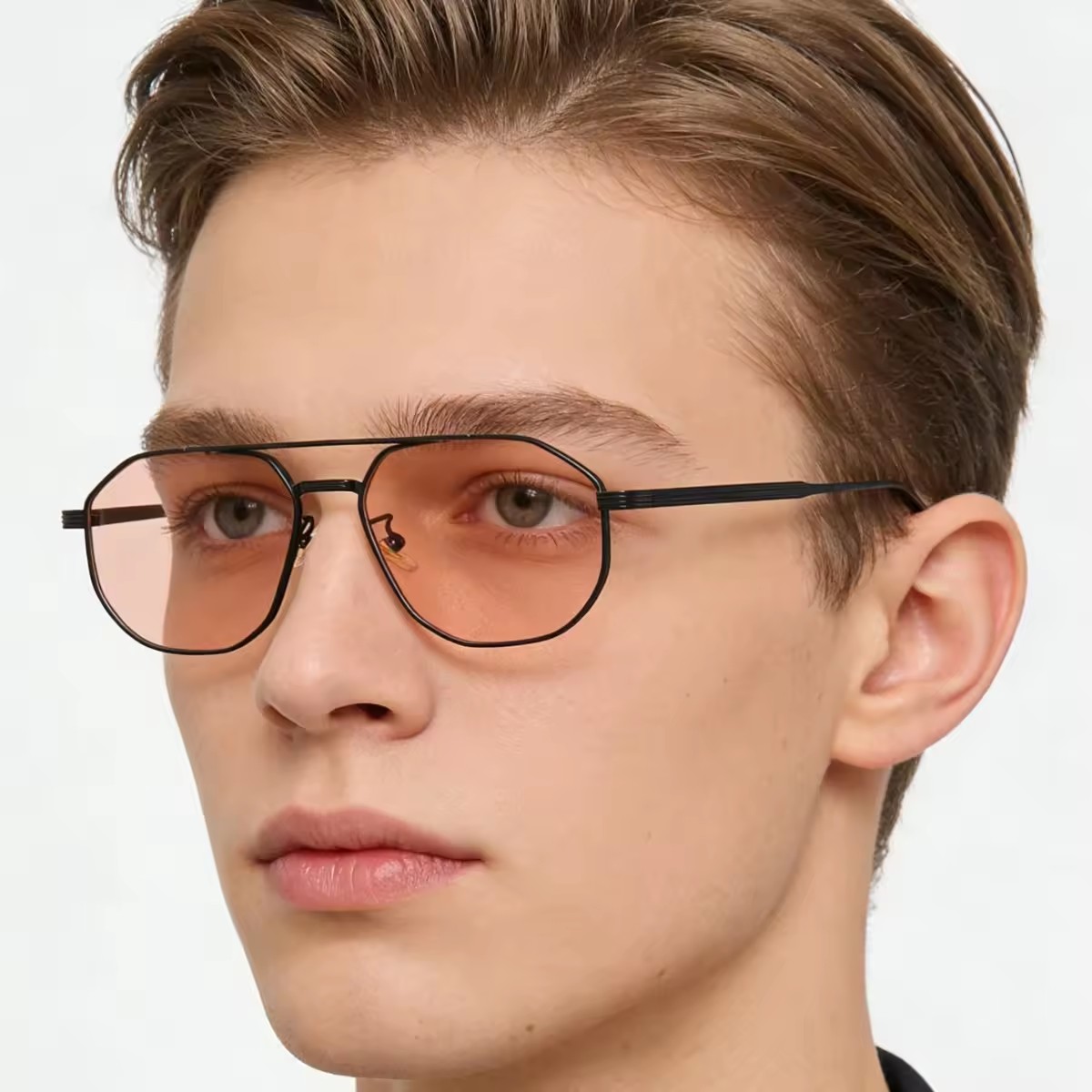
Lens selection introduces another significant variable in cost breakdown analysis. Basic acrylic or basic PC lenses carry lower baseline costs, whereas polarized lenses, gradient colorations, photochromic transitions, or specialized anti-blue light coatings add distinct unit costs. Manufacturers using advanced optical testing verify UV400 filtering and impact resistance, which adds marginal testing overhead but guarantees product durability and safety standard compliance.
Customization costs must be evaluated by separating initial tooling charges from volume manufacturing. Custom logo application using laser engraving or silkscreening requires setup labor. Yiwu Green Shine Arts & Crafts Co., Ltd utilizes 3D modeling design systems and rapid prototyping equipment to optimize structural designs before full mold customization, reducing sample turnaround times and minimizing long-term unit production waste.
Data/Solution Comparison
| Cost Category | Primary Cost Drivers | Evaluation Metric | Impact on Unit Price |
|---|---|---|---|
| Frame Fabrication | Metal alloys, acetate, electroplating, double-bridge assembly | Material durability, finish uniformity, weight balance | High |
| Lens Processing | UV400 protection, gradient tinting, anti-blue light coating | Optical clarity, UV blockage compliance, scratch resistance | Medium to High |
| Branding & Tooling | Laser logo printing, custom mold creation, sample prototyping | Setup fee vs. continuous per-unit amortization | Medium (One-time NRE) |
| Quality Inspection | Optical alignment, hinge durability testing, spot inspection | Defect rate threshold, international standard compliance | Low to Medium |
| Logistics & Freight | Sea Freight, Air Freight, Land Transportation, custom packaging | Lead time, volumetric weight, transit risk protection | Variable |
Frequently Asked Questions (FAQ)
How can buyers spot hidden fees in a sunglasses manufacturer quote?
Hidden fees often appear in unlisted mold setup charges, logo plate creation costs, individual polybag packaging additions, or post-production inspection surcharges. Requesting a line-item BOM break down ensures all manufacturing stages and administrative fees are clearly stated upfront.
Why do frame materials significantly alter the overall quote?
Materials like high-grade metal alloys or handmade acetate require multiple processing stages, including manual polishing, electroplating, and structural welding, whereas standard molded plastics require fewer labor steps after mold creation.
What role do minimum order quantities (MOQs) play in unit price evaluation?
Higher order volumes distribute fixed setup and mold creation costs across more units, lowering individual frame costs. Small batch production absorbs higher setup overhead per unit, increasing the total price per pair.
Final Conclusion & Recommendations
Evaluating cost breakdowns from eyewear suppliers demands a clear distinction between raw material inputs, lens technologies, structural processing, and logistics management. Buyers should request structured quotations separating NRE tooling costs from mass production fees to negotiate fair tiered pricing structures across different order volumes. Payment structures typically utilize Corporate Bank Transfer / Wire Transfer, while shipment options vary between Sea Freight, Land Transportation, and Air Freight depending on delivery urgency. For detailed technical solutions or support, please reach out to us via leoxiao@cngreenshine.com.
About Us
Yiwu Green Shine Arts & Crafts Co., Ltd was established in 2016 and operates in Yiwu City, Zhejiang Province. With a 90% export ratio, the enterprise serves key international markets across the United States, Spain, Germany, Australia, Italy, France, and Ireland. Supported by standardized production workshops and mature assembly lines, the facility maintains an annual output exceeding 3 million pairs of sunglasses, offering OEM and ODM services across fashion sunglasses, metal pilot frames, reading glasses, and anti-blue light eyewear.

Lastest
-
Can a factory make exclusive designer sunglasses molds that stay private to my brand?
2026-10-02 -
How do I check a designer sunglasses factory for quality and labor risks?
2026-10-02 -
How can I make sure sun glasses samples match the final production quality?
2026-10-02 -
Is FOB or CIF usually better for importing designer sunglasses with fewer surprises?
2026-10-02 -
Why does acetate manufacturing extend lead time for designer sunglasses?
2026-10-02
SUBSCRIBE
INQUIRY