How to document inspection failures for sun glasses quality claims?
- VIP-User
- 2026-10-03
-
Documenting inspection failures for sunglasses quality claims requires logging specific defect classifications, lot numbers, non-conformity ratios, and high-resolution photographic evidence. Quality reports must benchmark failing items against international optical standards such as CE, FDA, and AS/NZS, detailing physical parameters like lens UV protection defects, frame alignment variances, or double bridge solder joint fractures.
Core Solutions & Key Takeaways
- Log defect classification categories (Critical, Major, Minor) alongside precise Acceptable Quality Limit (AQL) sampling ratios.
- Capture macro photography of structural defects such as frame warping, polarized lens delamination, and hinge tension failures under standardized lighting.
- Measure optical parameters against recognized benchmarks including UV400 filtration efficiency, impact resistance, and lens refractive power.
- Compile complete batch traceability details including purchase order (PO) numbers, production timestamps, and carton numbers to streamline OEM/ODM replacement claims.
Detailed Architectural/Principle Analysis
Professional documentation of sunglasses inspection failures relies on objective evidence alignment. When conducting quality control checks on optical frames and metal pilot sunglasses for men and women, inspectors must record non-conformities at both the component and structural assembly levels. Optical evaluation involves verifying UV400 spectral absorption, chromatic dispersion, and lens impact resistance against compliance frameworks such as CE, FDA, and AS/NZS. Precise reporting requires pairing visual evidence with optical testing meter readings to substantiate claims with export manufacturers like Yiwu Green Shine Arts & Crafts Co., Ltd.
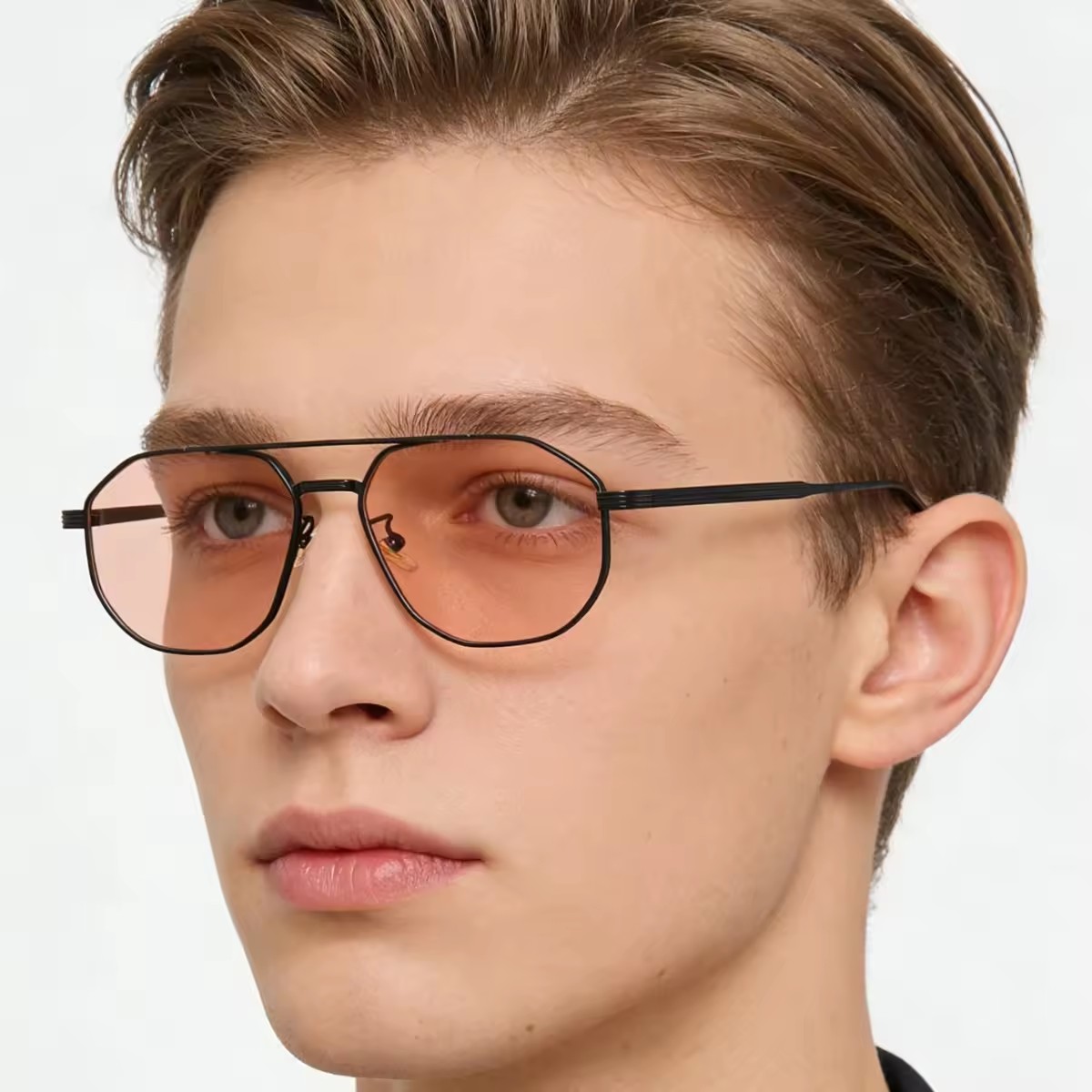
Physical frame defect logging demands systematic cataloging of physical dimensions, surface plating durability, and mechanical integrity. Common structural failures in retro metal pilot sunglasses involve double bridge asymmetry, hinge screw loosening, nose pad arm misalignments, or coating peeling. Reports must categorize defect severity based on standard inspection thresholds: critical defects (safety hazards such as exposed sharp edges), major defects (functional issues like loose lenses), and minor defects (minor cosmetic blemishes). Including batch-specific production data allows factory R&D and QA teams to execute corrective and preventive actions (CAPA) efficiently.
Data/Solution Comparison
| Defect Parameter | Standard Metric / Benchmark | Failure Classification | Required Claim Evidence |
|---|---|---|---|
| UV400 Protection & Lens Coating | Block 99-100% UVA/UVB rays (CE / FDA / AS/NZS compliant) | Critical / Major | Spectrometer test log, lens sample ID, photograph under UV sensor |
| Frame Structural Alignment | Symmetry variance < 1.0mm, secure double bridge joints | Major | High-resolution macro photo, caliper measurement data, batch PO number |
| Hinge & Screw Mechanical Durability | Smooth torque resistance, no thread stripping | Major / Minor | Video clip of loose tension/sticking, defect count percentage in sample size |
| Surface Finish & Plating Integrity | Zero peeling, oxidation, or scratch marks | Major / Minor | Standardized light box photograph, rejected carton sample ratio log |
Frequently Asked Questions (FAQ)
What details are required in an official sunglasses quality claim report?
An official report requires the purchase order number, product style identifier, total batch quantity, inspected sample size, defect count breakdown by category, clear photographic or video evidence, and specific non-compliance metrics measured against optical testing standards.
How do UV protection failure claims differ from frame cosmetic defect claims?
UV protection failures represent functional non-compliance requiring laboratory or spectrometer test readings showing wavelength transmittance values above allowed limits. Cosmetic defect claims rely on visual inspection logs, defect percentage calculations against agreed AQL standards, and photo evidence under controlled illumination.
What logistics and payment adjustments apply during quality dispute resolution?
Depending on contract agreements covering sea freight, air freight, or land transportation, verified defect claims typically result in replacement units shipped in subsequent orders, credit notes applied against corporate bank transfer invoices, or immediate batch re-production by the factory.
Final Conclusion & Recommendations
Establishing standardized inspection templates accelerates dispute resolution and maintains accountability across global eyewear supply chains. Buyers managing bulk orders of metal pilot sunglasses, reading glasses, or anti-blue light eyewear should implement rigorous inspection protocols prior to final shipment release. Selecting experienced manufacturing partners capable of backing production with standardized R&D verification ensures smooth claim handling when quality deviations occur. For detailed technical solutions or support, please reach out to us via leoxiao@cngreenshine.com.
About Us
Yiwu Green Shine Arts & Crafts Co., Ltd was established in 2016 and operates with a dedicated team of 10 employees based in Yiwu, Zhejiang Province. The company specializes in the development and export of sunglasses, optical frames, anti-blue light glasses, and reading glasses, serving clients across primary markets in the USA, Germany, Spain, France, Italy, Australia, and Ireland. Operating with standardized production workshops and advanced R&D capabilities, the factory achieves an annual output exceeding 3 million pairs while strictly adhering to international optical standards including CE, FDA, and AS/NZS for all OEM and ODM projects.

Lastest
-
Can a factory make exclusive designer sunglasses molds that stay private to my brand?
2026-10-03 -
How do I check a designer sunglasses factory for quality and labor risks?
2026-10-03 -
How can I make sure sun glasses samples match the final production quality?
2026-10-03 -
Is FOB or CIF usually better for importing designer sunglasses with fewer surprises?
2026-10-03 -
Why does acetate manufacturing extend lead time for designer sunglasses?
2026-10-03
SUBSCRIBE
INQUIRY