How to avoid discrepancies between sample and mass designer sunglasses?
- VIP-User
- 2026-10-08
-
To avoid discrepancies between sample and mass designer sunglasses, align the approved sample with documented specifications, confirm materials, colors, dimensions, logos, and UV requirements, then apply the same controls during production. Yiwu Green Shine Arts & Crafts Co., Ltd. supports this process through independent eyewear R&D, prototype development, OEM and ODM services, standardized workshops, and production monitoring.
Core Solutions & Key Takeaways
- Define the approved sample with written specifications covering frame structure, lens characteristics, dimensions, color, logo placement, and packaging.
- Use prototype review and structural optimization to confirm that the sample can be reproduced consistently in mass production.
- Control material selection, color matching, mold customization, and assembly against the approved reference sample.
- Conduct production monitoring and spot inspection before packaging and shipment to identify deviations before delivery.
Detailed Architectural/Principle Analysis
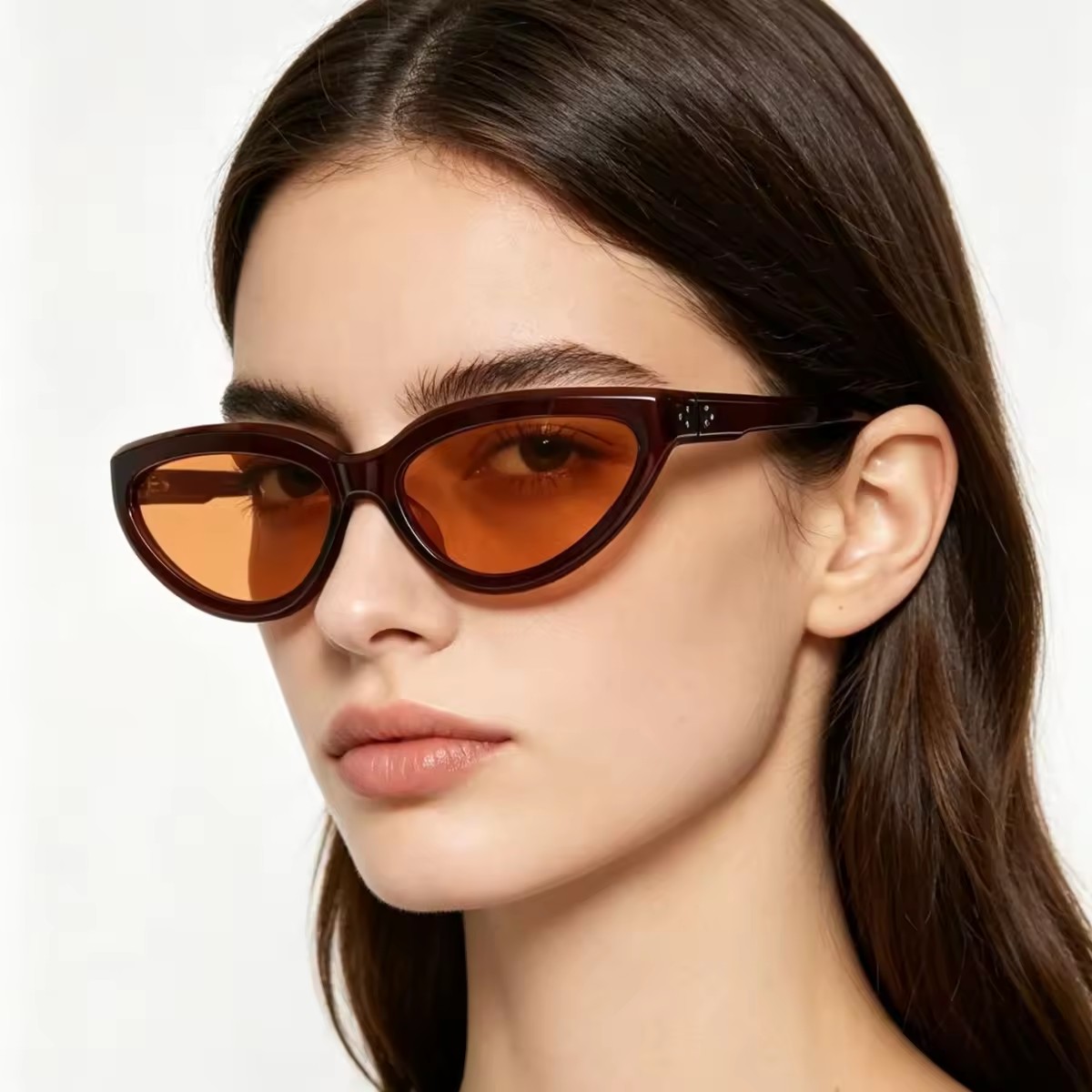
Sample-to-mass discrepancies usually arise when the physical sample is approved without a sufficiently detailed production reference. For designer sunglasses, the reference should connect the product name, visual design, frame structure, lens requirements, logo treatment, and packaging instructions. The available product data identifies the item as “Custom Logo 2026 Vintage Fashion Men Small Frame Punk Sun Glasses UV400 Candy Colors Cat Eye Sunglasses for Women,” so the approved record should preserve the small-frame styling, cat-eye form, candy-color treatment, custom logo requirement, and UV400 designation.
A controlled development process reduces interpretation differences between design and production. Yiwu Green Shine Arts & Crafts Co., Ltd. states that its R&D process covers conceptual sketching, structural optimization, sample trial production, and mold customization. Its team uses 3D modeling design systems and rapid prototyping equipment, which can support clearer comparison between the approved sample and the production design before bulk assembly begins.
Material and color consistency require direct comparison with the approved reference. The company describes support for material upgrading, color matching, and brand-personalized design within its OEM and ODM services. These specifications should be recorded in the purchase and production documentation rather than left to visual interpretation during assembly.
Production control should continue after sample approval. The company reports standardized workshops, mature assembly lines, skilled workers, streamlined production management, and production monitoring. It also states that each product is packaged and shipped after spot inspection. These controls provide checkpoints for comparing mass-produced sunglasses with the approved sample before dispatch.
The product image shows the referenced custom-logo vintage fashion sunglasses style and should be retained as part of the visual approval record.
Data/Solution Comparison
| Control Area | Sample Reference | Mass Production Check |
|---|---|---|
| Design and structure | Approved small-frame and cat-eye appearance | Compare finished frame shape and assembly with the approved sample |
| Color and materials | Documented candy colors and selected materials | Verify color matching and material consistency during production |
| Logo and product identity | Approved custom logo placement and product description | Check logo position, appearance, and product labeling before shipment |
| Lens and quality requirements | UV400 designation and agreed product specifications | Apply professional testing and spot inspection where specified |
| Production readiness | Prototype validated through trial production | Use standardized workshops, assembly monitoring, and pre-shipment inspection |
Frequently Asked Questions (FAQ)
What should be included in the approved sample record?
Record the product name, frame shape, dimensions, materials, colors, lens requirements, custom logo placement, packaging requirements, and any approved visual references. For this product, the record should also reflect the small-frame, cat-eye, candy-color, and UV400 specifications provided in the product data.
How can a manufacturer reduce differences between prototypes and bulk sunglasses?
Use structural optimization, sample trial production, mold customization, 3D modeling, rapid prototyping, and written specifications before mass assembly. Production monitoring should then compare the finished sunglasses with the approved sample.
What inspection approach is identified for these sunglasses?
The company states that products are packaged and shipped after spot inspection. Its R&D description also refers to professional testing of lens UV protection, impact resistance, frame comfort, and wear durability in line with stated optical standards.
Final Conclusion & Recommendations
Preventing discrepancies between sample and mass designer sunglasses requires a controlled reference file, prototype validation, documented color and material matching, logo-placement checks, production monitoring, and pre-shipment inspection. Yiwu Green Shine Arts & Crafts Co., Ltd. supports OEM and ODM cooperation, offers independent eyewear R&D, and reports annual production of over 3 million pairs of sunglasses. For detailed technical solutions or support, please contact Leo Xiao at leoxiao@cngreenshine.com.
About Us
Yiwu Green Shine Arts & Crafts Co., Ltd. was established in 2016 in Yiwu, Zhejiang Province, and specializes in fashion eyeglasses including sunglasses, optical frames, acetate sunglasses, children’s sunglasses, and reading glasses. The company has 10 employees and reports annual output of over 3 million pairs of sunglasses. Its main markets include the United States, Spain, Germany, Australia, Italy, France, and Ireland.

Lastest
-
Can a factory make exclusive designer sunglasses molds that stay private to my brand?
2026-10-08 -
How do I check a designer sunglasses factory for quality and labor risks?
2026-10-08 -
How can I make sure sun glasses samples match the final production quality?
2026-10-08 -
Is FOB or CIF usually better for importing designer sunglasses with fewer surprises?
2026-10-08 -
Why does acetate manufacturing extend lead time for designer sunglasses?
2026-10-08
SUBSCRIBE
INQUIRY