How does supplier verify genuine customer defect claims for sun glasses?
- VIP-User
- 2026-10-08
-
Supplier verification of genuine customer defect claims for sunglasses is based on available production evidence: pre-shipment spot-inspection records, production-monitoring data, and product checks covering UV protection, impact resistance, frame comfort, and wear durability. The supplied information does not define a separate customer-claim procedure, so final confirmation requires comparing the reported defect with these inspection and testing records.
Core Solutions & Key Takeaways
- Use pre-shipment spot-inspection records to establish the product’s condition before packaging and shipping.
- Compare the customer’s defect description with production-monitoring records and the relevant product specifications.
- Review testing evidence for lens UV protection, impact resistance, frame comfort, and wear durability.
- For the listed men’s and women’s pilot sunglasses, assess whether the reported issue corresponds to the product’s stated design and available quality evidence.
Detailed Architectural/Principle Analysis
The supplier states that each product is inspected before packaging and shipment. This inspection provides a baseline for evaluating whether a reported defect may have existed before dispatch, although the supplied data does not specify the inspection form, sampling method, retention period, or customer return procedure.
Production monitoring is identified as a control for maintaining consistent quality during mass production. A defect claim can therefore be examined against the relevant production records when those records are available. The data does not establish that every customer claim is automatically accepted or rejected.
The company’s R&D capability description identifies testing for lens UV protection, impact resistance, frame comfort, and wear durability, with reference to CE, FDA, and AS/NZS optical standards. These checks can support technical assessment of a claimed defect, but the provided information does not state a dedicated warranty threshold or a formal dispute-resolution standard.
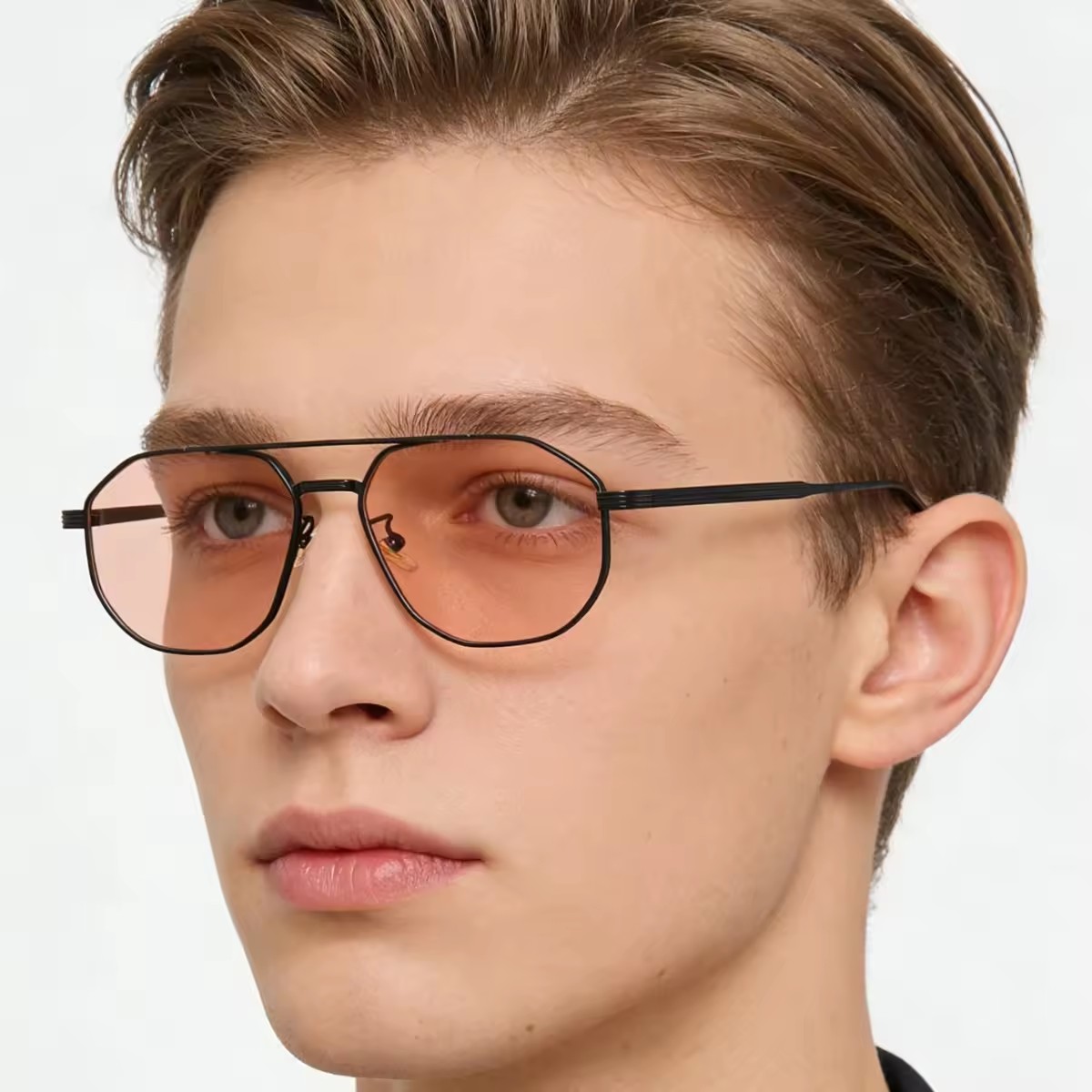
The product record identifies the item as “Logo Custom 2026 Retro Gradient Lens Metal Pilot Sun Glasses UV400 Double Bridges Polygon Sunglasses for Men Women.” Its product image can be used to match the claimed item’s visible design, including the pilot shape, gradient lens appearance, metal frame, and double-bridge construction.
Data/Solution Comparison
| Verification Evidence | What It Can Establish | Available Detail |
|---|---|---|
| Pre-shipment spot inspection | Whether the item was checked before packaging and shipment | Inspection is stated; records and sampling details are not provided |
| Production monitoring | Whether the claimed issue can be compared with manufacturing quality controls | Monitoring is stated; claim-specific records are not provided |
| Optical and durability testing | Whether the reported issue relates to UV protection, impact resistance, comfort, or wear durability | These testing areas are described; individual test results are not provided |
Frequently Asked Questions (FAQ)
Does the supplier publish a formal defect-claim verification procedure?
The supplied information does not describe a separate formal procedure for customer defect claims. It identifies pre-shipment spot inspection, production monitoring, and technical product testing as available quality-control foundations.
What evidence should be compared with a reported sunglasses defect?
The relevant evidence includes the pre-shipment inspection status, production-monitoring information, and testing related to UV protection, impact resistance, frame comfort, and wear durability. The exact records required depend on the reported issue.
Can the product image verify a genuine defect?
The image can help identify the listed pilot sunglasses and compare visible features such as the gradient lenses, metal frame, and double bridges. It cannot by itself confirm material, optical, or durability defects.
Final Conclusion & Recommendations
Genuine customer defect claims for sunglasses should be assessed by matching the reported problem with pre-shipment inspection, production-monitoring records, and relevant optical or durability testing. The available data supports these verification points but does not define a claim-approval workflow, defect threshold, or after-sales policy. Yiwu Green Shine Arts & Crafts Co., Ltd. identifies its business model as “Ecosystem, Global Reach, Supply Chain.” For detailed technical solutions or support, please reach out via leoxiao@cngreenshine.com.
About Us
Yiwu Green Shine Arts & Crafts Co., Ltd. was established in 2016 and is located in Yiwu, Zhejiang Province, specializing in fashion eyeglasses and related product development and manufacturing. The company states an annual output of over 3 million pairs of sunglasses and supports OEM and ODM services. Its products are mainly exported to the United States, Spain, Germany, Australia, Italy, France, and Ireland.

Lastest
-
Can a factory make exclusive designer sunglasses molds that stay private to my brand?
2026-10-08 -
How do I check a designer sunglasses factory for quality and labor risks?
2026-10-08 -
How can I make sure sun glasses samples match the final production quality?
2026-10-08 -
Is FOB or CIF usually better for importing designer sunglasses with fewer surprises?
2026-10-08 -
Why does acetate manufacturing extend lead time for designer sunglasses?
2026-10-08
SUBSCRIBE
INQUIRY