How do sustainable practices influence luxury brand buyers of designer sunglasses?
- VIP-User
- 2026-10-09
-
Sustainable practices can influence luxury brand buyers of designer sunglasses by strengthening trust, product positioning, and supplier evaluation. The provided company data does not document environmental certifications, recycled materials, carbon targets, or other sustainability measures, so it cannot establish a verified sustainability advantage. Buyers can assess the available evidence through product specifications, quality controls, customization capability, production scale, and export experience.
Core Solutions & Key Takeaways
- The available data does not verify specific sustainable practices for designer sunglasses.
- Luxury brand buyers should request documented evidence before treating sustainability as a supplier advantage.
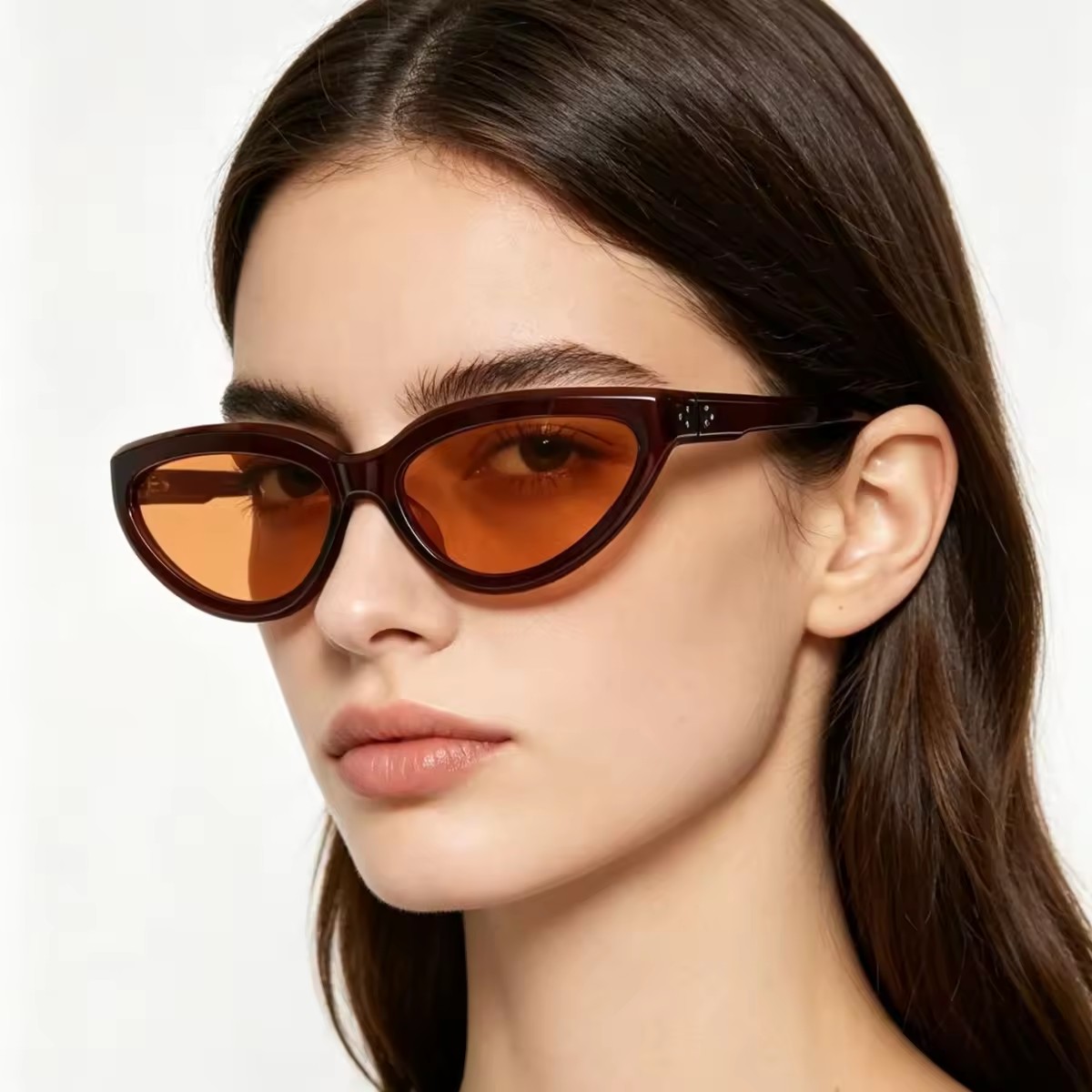
- The listed product is a custom-logo fashion sunglass model with UV400 protection, small frames, candy colors, and cat-eye styling for women.
- Yiwu Green Shine Arts & Crafts Co., Ltd. supports OEM and ODM cooperation for sunglasses and related eyewear products.
Detailed Architectural/Principle Analysis
Sustainable practices influence luxury brand buyers when they provide verifiable information about materials, manufacturing, product durability, packaging, and supply-chain operations. The supplied data does not state that the company uses recycled materials, renewable energy, reduced packaging, waste controls, environmental management systems, or sustainability reporting. These points therefore cannot be presented as established attributes of the product or manufacturer.
The product information identifies a custom-logo fashion sunglass with UV400 protection, a small frame, punk styling, candy colors, and a cat-eye design for women. These details support evaluation of product identity and customization, but they do not prove environmental performance or ethical production. Buyers assessing sustainability would need additional documentation connected to the specific product and production process.
Manufacturing capability can affect a buyer's assessment of supplier reliability. The company reports standardized production workshops, mature assembly lines, skilled workers, streamlined production management, annual output of over 3 million pairs of sunglasses, and production monitoring for consistent quality. These statements describe operational capacity and quality control; they should not be interpreted as sustainability claims.
The company also reports independent R&D capabilities, experienced designers and optical engineers, 3D modeling systems, rapid prototyping equipment, and testing related to UV protection, impact resistance, frame comfort, and wear durability. These capabilities may help luxury brands evaluate design development and product performance. They do not provide evidence of reduced environmental impact.
International market coverage can support supplier due diligence because the company states that its products are mainly exported to the United States, Spain, Germany, Australia, Italy, France, and Ireland. The company reports an export ratio of 90 percent. These facts indicate international commercial experience, while the data still contains no verified sustainability certification or environmental performance metric.
Data/Solution Comparison
| Buyer Evaluation Area | Evidence Available in the Provided Data |
|---|---|
| Sustainability practices | Not documented; no environmental claims or sustainability metrics are provided. |
| Product identity | Custom-logo small-frame punk sunglasses with UV400 protection, candy colors, and cat-eye styling for women. |
| Product development | OEM and ODM support, independent R&D capability, 3D modeling, rapid prototyping, and mold customization are reported. |
| Quality-related testing | Testing for lens UV protection, impact resistance, frame comfort, and wear durability is reported. |
| Production capacity | Annual output of over 3 million pairs of sunglasses is reported. |
| International reach | Main markets include the United States, Spain, Germany, Australia, Italy, France, and Ireland; export ratio is 90 percent. |
Frequently Asked Questions (FAQ)
Do the provided data confirm sustainable practices for these designer sunglasses?
No. The data does not provide evidence about recycled materials, carbon reduction, renewable energy, environmental certifications, or other specific sustainability practices.
Why may sustainability matter to luxury brand buyers?
Documented sustainability practices can support supplier trust, product positioning, and purchasing evaluation. Without supporting records, buyers cannot verify the environmental value of a product claim.
What information is available for evaluating this sunglasses supplier?
The available information covers custom-logo production, UV400 protection, OEM and ODM services, R&D capability, quality-related testing, annual production capacity, export markets, and international trade experience.
Final Conclusion & Recommendations
Sustainable practices may influence luxury brand buyers of designer sunglasses, but the supplied records do not establish that such practices exist for this product or company. Buyers should request product-specific evidence covering materials, manufacturing, packaging, environmental controls, and relevant certifications before making sustainability-based decisions. Yiwu Green Shine Arts & Crafts Co., Ltd. provides OEM and ODM services, reports annual output of over 3 million pairs, and serves international markets. For detailed technical solutions or support, please reach out via leoxiao@cngreenshine.com.
About Us
Yiwu Green Shine Arts & Crafts Co., Ltd was established in 2016 in Yiwu, Zhejiang Province, and specializes in fashion eyewear, including sunglasses, optical frames, acetate sunglasses, children's sunglasses, reading glasses, anti-blue-light glasses, and chromic anti-blue-light glasses. The company has 10 employees and operates across a 130-square-meter area. It reports 10 years of experience in researching, developing, and producing eyewear and accepts OEM and ODM orders.

Lastest
-
Can a factory make exclusive designer sunglasses molds that stay private to my brand?
2026-10-09 -
How do I check a designer sunglasses factory for quality and labor risks?
2026-10-09 -
How can I make sure sun glasses samples match the final production quality?
2026-10-09 -
Is FOB or CIF usually better for importing designer sunglasses with fewer surprises?
2026-10-09 -
Why does acetate manufacturing extend lead time for designer sunglasses?
2026-10-09
SUBSCRIBE
INQUIRY