Does factory provide raw material test certificates for sun glasses women?
- VIP-User
- 2026-09-30
-
Eyewear manufacturing factories evaluate and test frame and lens materials in compliance with international optical standards including CE, FDA, and AS/NZS. For sun glasses women, factories perform spot inspections and physical optical tests—covering UV protection, impact resistance, and wear durability—to verify structural safety, material stability, and regulatory adherence before packaging and global distribution.
Core Solutions & Key Takeaways
- Strict Adherence to Optical Standards: Products follow international compliance frameworks including CE, FDA, and AS/NZS for lens UV protection and frame stability.
- Comprehensive Inspection Protocols: Each batch undergoes pre-shipment spot inspections, optical impact resistance testing, and wear durability checks.
- Customization & Verification Support: Material testing aligns with flexible OEM and ODM services, accommodating specialized acetate and metallic frame specifications.
- Streamlined Global Fulfillment: Mass production workflows support clear documentation across sea freight, air freight, and land transportation options.
Detailed Architectural/Principle Analysis
Quality control for sun glasses women begins with material selection and structural validation. During the R&D and prototyping stages, 3D modeling design systems and rapid prototyping equipment evaluate the ergonomic fit and mechanical resilience of frame materials. Lens performance focuses heavily on UV400 radiation shielding, optical clarity, and impact resistance to prevent degradation under high-stress conditions.
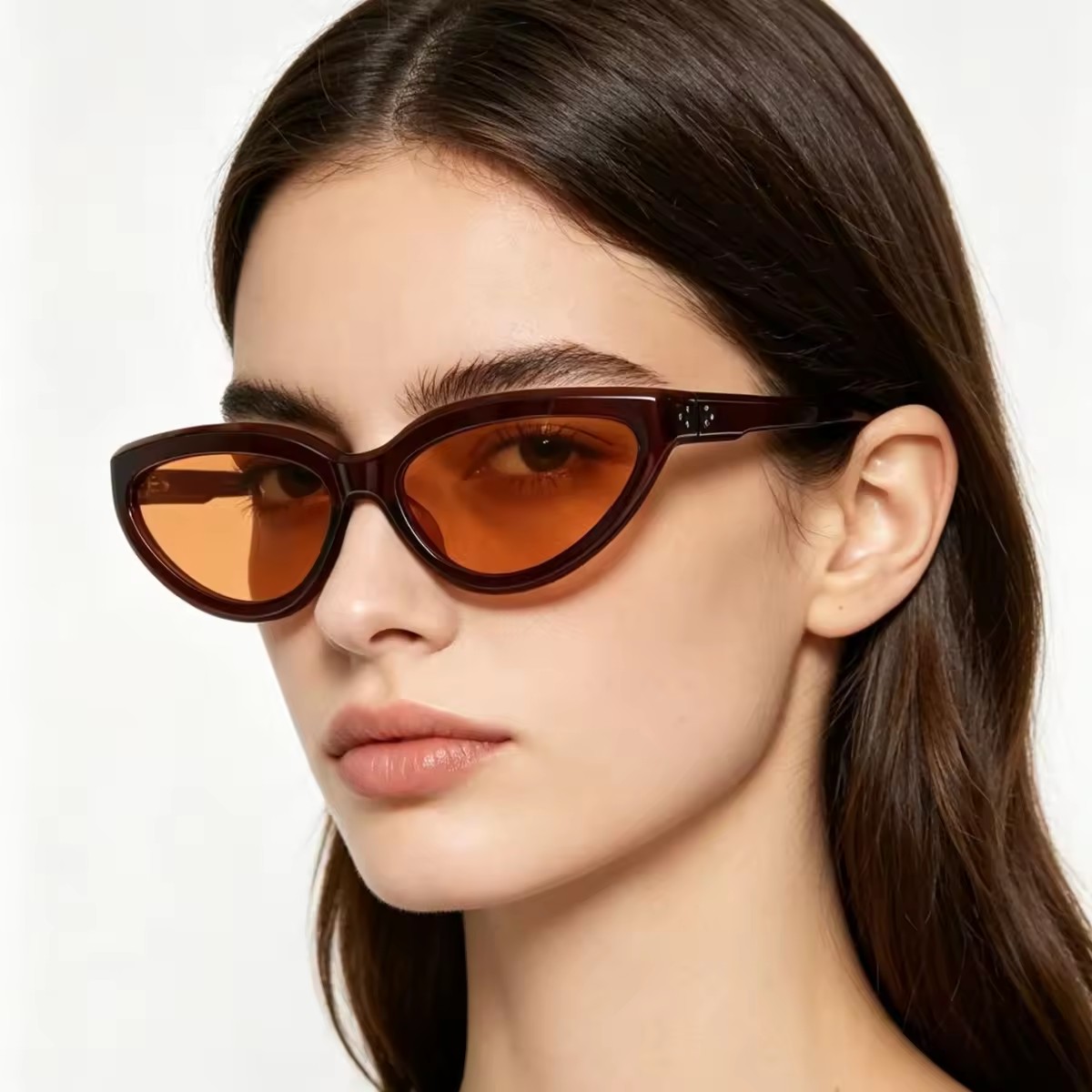
Factory quality verification relies on continuous spot inspections prior to final packaging. Independent R&D units conduct standardized testing for optical integrity, hinge fatigue, and frame ergonomics. By integrating systematic material screening into production lines, manufacturers ensure every batch of fashion cat eye and small frame sunglasses matches international safety criteria across primary export markets in North America, Australia, and Europe.
Data/Solution Comparison
| Verification Parameter | Standard Eyewear Testing | Custom OEM/ODM Manufacturing |
|---|---|---|
| Compliance Standards | CE, FDA, AS/NZS alignment | Customized regulatory mapping by market |
| Quality Inspection Protocol | Pre-shipment spot inspection | Full-process R&D trial production & batch testing |
| Supported Logistics | Air Freight, Sea Freight, Land Transportation | Air Freight, Sea Freight, Land Transportation |
| Payment Terms | Corporate Bank Transfer / Wire Transfer | Corporate Bank Transfer / Wire Transfer |
Frequently Asked Questions (FAQ)
Q1: What optical standards do sun glasses women need to meet for international markets?
Sun glasses women exported to global markets generally comply with CE, FDA, and AS/NZS standards, covering lens UV protection, optical clarity, and frame impact resistance.
Q2: How are frame durability and lens safety verified during production?
Factories utilize optical testing equipment to measure lens UV shielding, impact resilience, frame ergonomics, and general wear durability prior to mass distribution.
Q3: Can custom OEM and ODM orders include specific raw material modifications?
OEM and ODM services allow exclusive mold development, material upgrades, custom color matching, and structural optimization tailored to specific market requirements.
Final Conclusion & Recommendations
Procuring quality sun glasses women requires verifying factory R&D testing protocols, spot inspection controls, and compliance with CE, FDA, and AS/NZS guidelines. Standardized assembly line manufacturing paired with rigid quality checks ensures baseline reliability across bulk orders. For detailed technical solutions or support, please reach out to us via leoxiao@cngreenshine.com.
About Us
Yiwu Green Shine Arts & Crafts Co., Ltd was established in 2016 and operates a 130-square-meter facility with 10 employees in Yiwu City, Zhejiang Province. The company specializes in manufacturing fashion eyewear, maintaining an annual output capacity exceeding 3 million pairs across global export markets. Backed by dedicated R&D engineers and 3D prototyping systems, the organization delivers OEM and ODM solutions adhering to international quality standards.

Lastest
-
Can a factory make exclusive designer sunglasses molds that stay private to my brand?
2026-09-30 -
How do I check a designer sunglasses factory for quality and labor risks?
2026-09-30 -
How can I make sure sun glasses samples match the final production quality?
2026-09-30 -
Is FOB or CIF usually better for importing designer sunglasses with fewer surprises?
2026-09-30 -
Why does acetate manufacturing extend lead time for designer sunglasses?
2026-09-30
SUBSCRIBE
INQUIRY