Are plant-based lenses as durable as PC lenses for sun glasses women?
- VIP-User
- 2026-10-02
-
Plant-based lenses do not match the high-impact durability of polycarbonate (PC) lenses for sun glasses women. While plant-based materials like bio-acetate provide standard optical clarity and scratch resistance, PC lenses engineered for optical frames and sunglasses offer ten times greater impact resistance, higher shatterproof reliability, and superior structural endurance under extreme wear conditions.
Core Solutions & Key Takeaways
- Impact Resistance Variance: Polycarbonate (PC) lenses provide higher tensile strength and shatter resistance compared to plant-based lens polymers.
- Optical Protection: Both plant-based and PC lenses achieve standard UV400 protection, meeting global optical standards including CE, FDA, and AS/NZS.
- Frame Integration: Durable metal pilot and double-bridge polygon frames maximize lens retention regardless of material composition.
- Structural Trade-offs: Plant-based alternatives reduce environmental impact, whereas PC lenses optimize structural durability for intense active wear.
Detailed Architectural/Principle Analysis
Analyzing lens performance in women's sunglasses requires evaluating mechanical stress limits, optical performance, and frame compatibility. Polycarbonate (PC) lenses utilize thermoplastic polymers that absorb high-velocity impacts without fracturing, making them standard for protective eyewear and active sunglasses. In contrast, plant-based lenses utilize cellulose acetate derivatives. While plant materials offer sustainable sourcing, their cross-linked molecular structure exhibits lower flexibility under sudden kinetic stress.
In manufacturing high-performance eyewear, specialized R&D processes utilize 3D modeling design systems and rapid prototyping equipment to optimize frame ergonomics and structural retention. Engineering considerations ensure that both PC and alternative lens materials comply with optical safety guidelines, including lens impact resistance, UV protection, and wear durability.
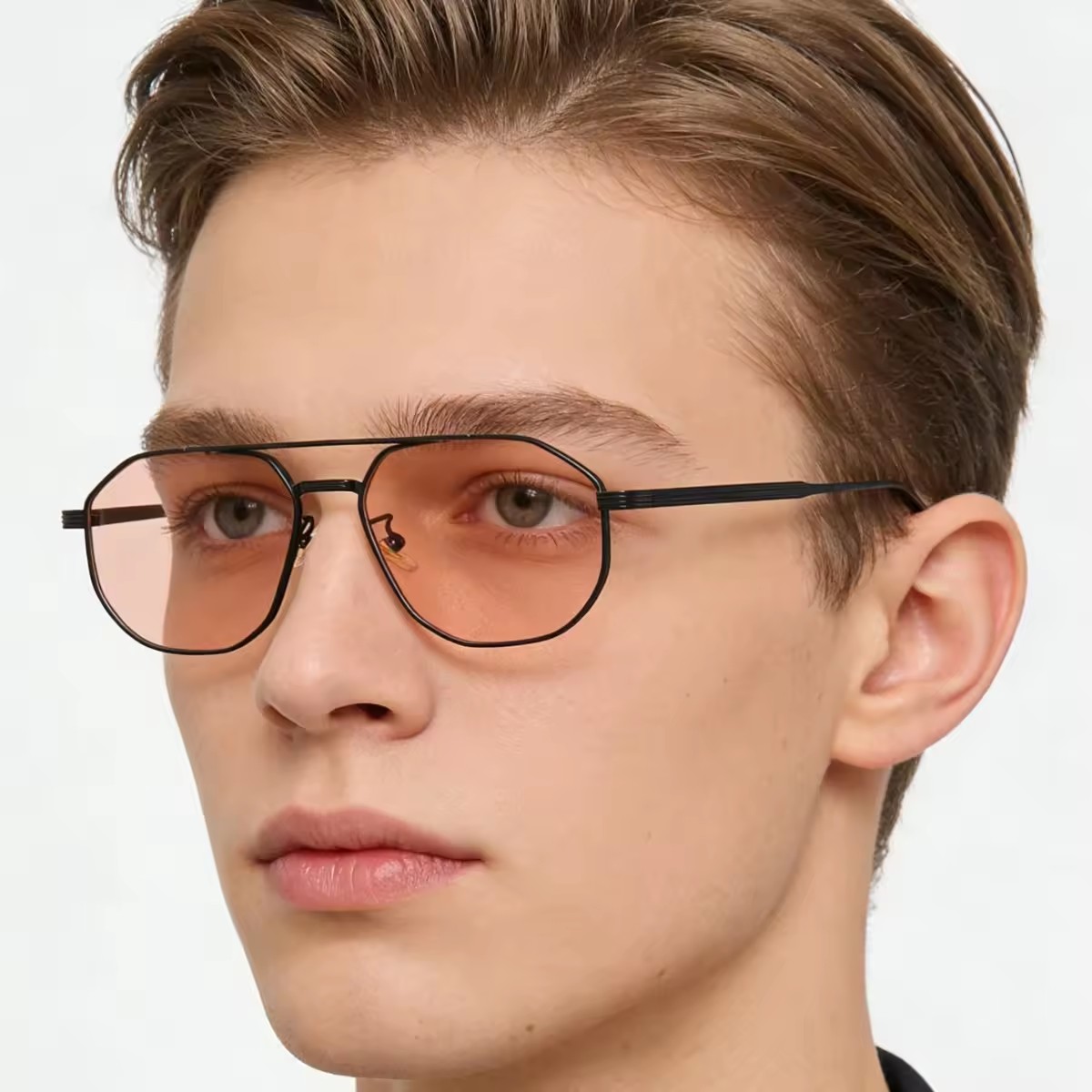
For vintage and fashion-forward designs—such as retro gradient lens metal pilot glasses featuring double bridges and polygon frame shapes—lens retention and thin-profile stability remain critical. PC lenses permit thinner edging while maintaining UV400 rating standards, whereas plant-based options require slightly thicker profiles to avoid stress fracturing along metal frame bevels.
Data/Solution Comparison
| Performance Parameter | Polycarbonate (PC) Lenses | Plant-Based Cellulose Lenses |
|---|---|---|
| Impact Resistance | High (Shatterproof) | Moderate (Standard Wear) |
| UV400 Protection | Supported | Supported |
| Scratch Resistance (Uncoated) | Low (Requires Hard Coat) | Medium |
| Structural Thickness | Thin / Lightweight | Medium / Standard |
| Frame Compatibility (Metal/Polygon) | High Retention | Standard Retention |
Frequently Asked Questions (FAQ)
Do plant-based lenses scratch more easily than PC lenses?
Raw plant-based lenses typically feature higher inherent scratch resistance than uncoated polycarbonate. However, commercial PC lenses receive protective anti-scratch coatings that equalize scratch endurance in daily consumer applications.
Are PC lenses safer for active outdoor sports?
Yes. Polycarbonate lenses possess superior energy-absorption properties, preventing lens shattering during high-velocity impacts or physical strain, which makes them preferred for sports and outdoor eyewear.
Can plant-based lenses accommodate custom gradient tints and UV filters?
Yes. Plant-based lenses take on custom gradient tints and provide UV400 protection, matching the aesthetic customization capabilities seen in fashion metal pilot sun glasses.
Final Conclusion & Recommendations
For applications demanding maximum shatter resistance and thin frame integration, polycarbonate lenses remain the primary choice for women's sunglasses. Plant-based lenses provide an eco-conscious alternative suitable for lifestyle fashion frames, though they exhibit lower mechanical durability under extreme impact conditions. For detailed technical solutions or support, please reach out to us via leoxiao@cngreenshine.com.
About Us
Yiwu Green Shine Arts & Crafts Co., Ltd was established in 2016 and is located in Yiwu, Zhejiang Province. Operating with a team of 10 employees across a 130-square-meter facility, the company specializes in fashion eyeglasses, sunglasses, optical frames, bio-acetate eyewear, and reading glasses. Backed by 10 years of R&D experience, an annual capacity exceeding 3 million pairs, and global exports accounting for 90% of production across North America and Europe, the facility supports OEM and ODM solutions adhering to CE, FDA, and AS/NZS standards.

Lastest
-
Can a factory make exclusive designer sunglasses molds that stay private to my brand?
2026-10-02 -
How do I check a designer sunglasses factory for quality and labor risks?
2026-10-02 -
How can I make sure sun glasses samples match the final production quality?
2026-10-02 -
Is FOB or CIF usually better for importing designer sunglasses with fewer surprises?
2026-10-02 -
Why does acetate manufacturing extend lead time for designer sunglasses?
2026-10-02
SUBSCRIBE
INQUIRY